
Valle Oscura — History & Facts
The echoes of violence linger in the shadows and light of this striking artwork, inviting contemplation on the coexistence of beauty and turmoil. Look to the foreground where jagged cliffs rise sharply against a tempestuous sky, the swirling clouds painted in hues of deep indigo and muted gray. The artist's use of rich, dark tones creates a dramatic contrast, pulling the viewer's gaze toward the turbulent valley below. Notice how the light seems to emanate from within the shadows, illuminating the pathways that wind through the rocky terrain, hinting at the tumultuous journey that lies ahead. In the center, a lone figure stands, dwarfed by the overwhelming landscape, echoing themes of isolation and vulnerability.
The tension between the dark, unforgiving cliffs and the faint glimmers of light serves as a reminder of the fine line between despair and hope. Each element in the painting resonates with the internal struggles of the human spirit, suggesting a world shaped by conflict yet yearning for peace. Eugen Jettel painted Valle Oscura in 1900, at a time when Europe was on the brink of monumental changes, both culturally and politically. Living in a period marked by transition and uncertainty, Jettel's work reflects an era that grappled with the scars of the past while searching for new identities.
This painting, steeped in the dualities of life, stands as a testament to the transformative power of art amidst a landscape of chaos.
More Artworks by Eugen Jettel
Browse all →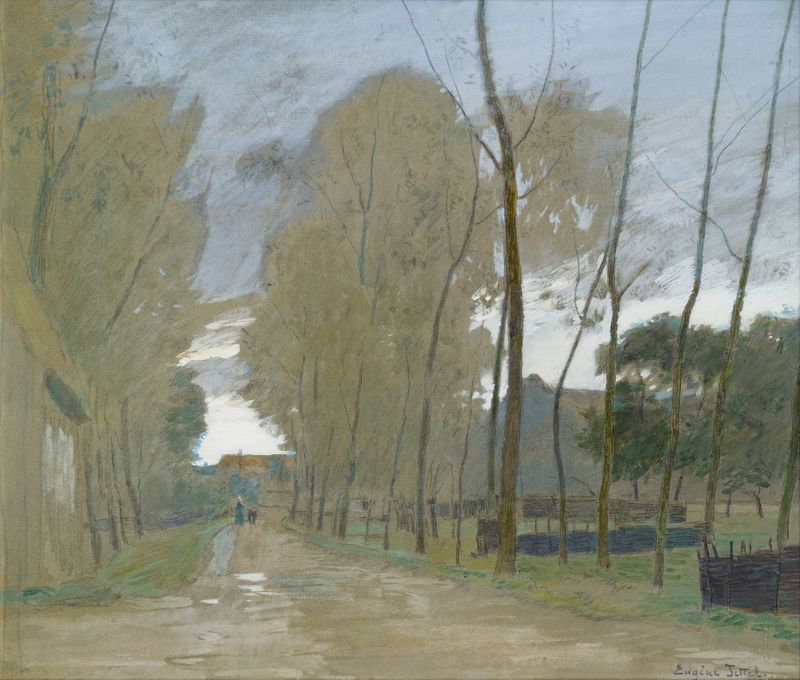
Motiv aus der Bretagne
Eugen Jettel
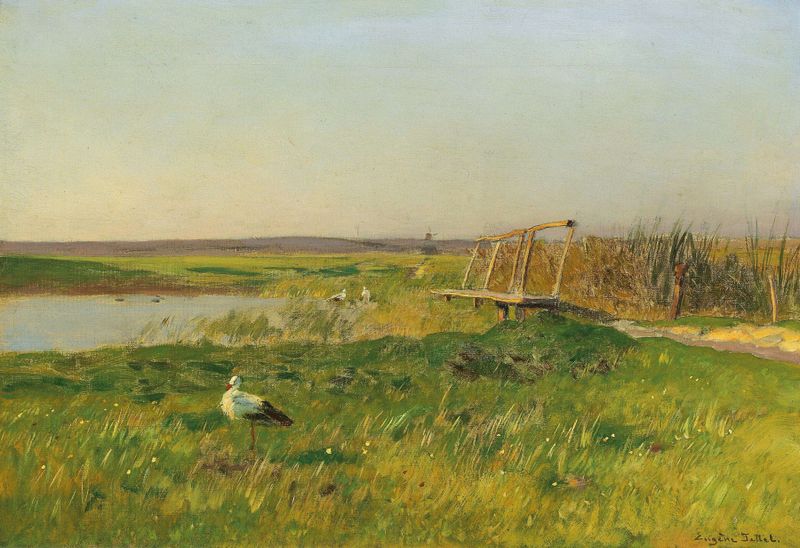
Frühlingslandschaft mit Störchen an einem Weiher
Eugen Jettel

Rinder auf Sommerwiese
Eugen Jettel
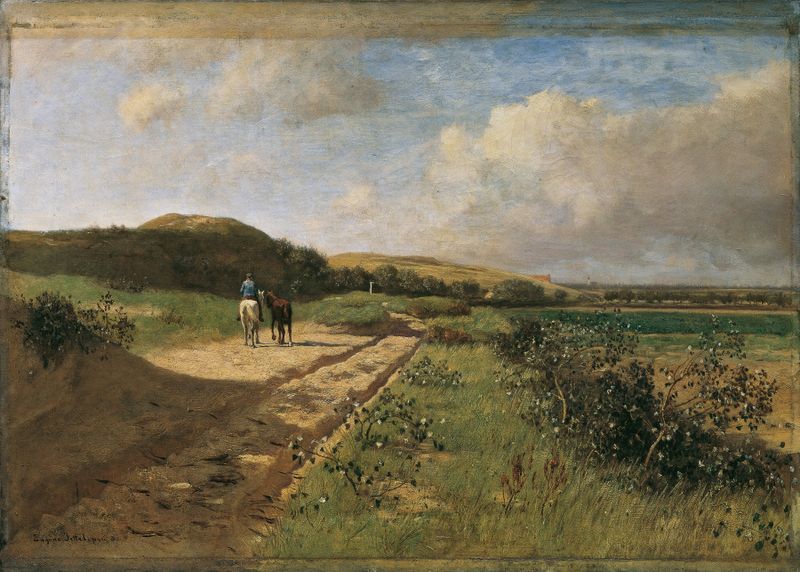
Dünen bei Katwijk
Eugen Jettel
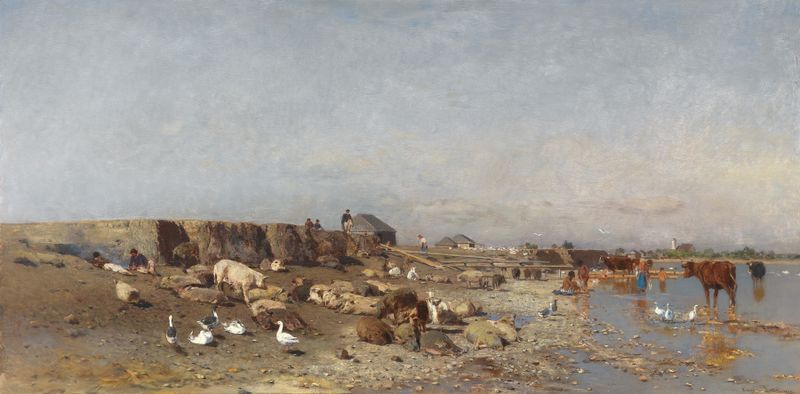
Motiv aus Szered an der Waag
Eugen Jettel
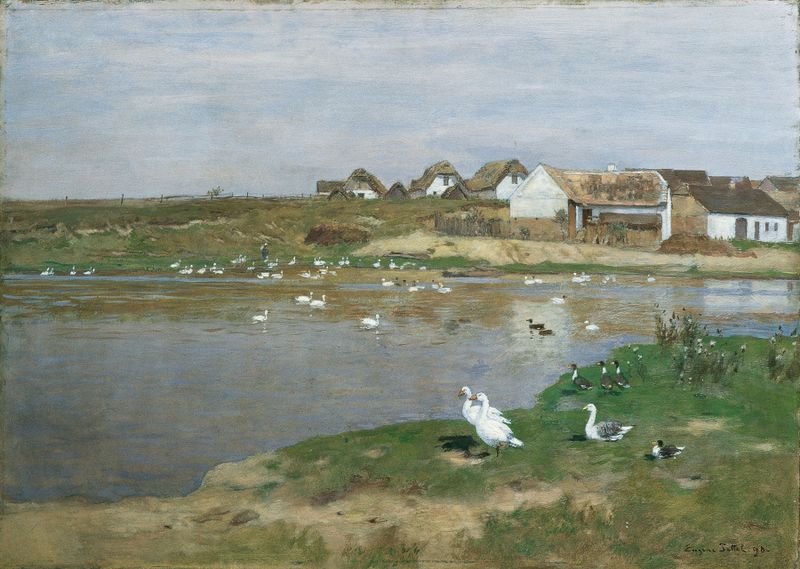
Der Gänseteich in Kotting-Neusiedl
Eugen Jettel

Flusslandschaft Mit Boot
Eugen Jettel

Flusslandschaft mit Kühen
Eugen Jettel

Dorfpartie Strohhütten aus Staatz
Eugen Jettel

Abendlandschaft
Eugen Jettel





