Abendlandschaft mit Hirten — History & Facts
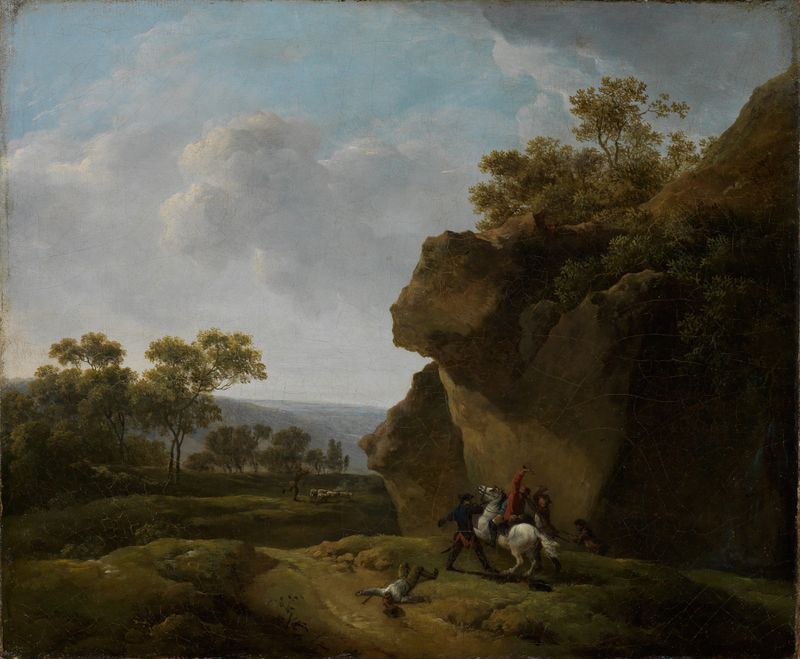
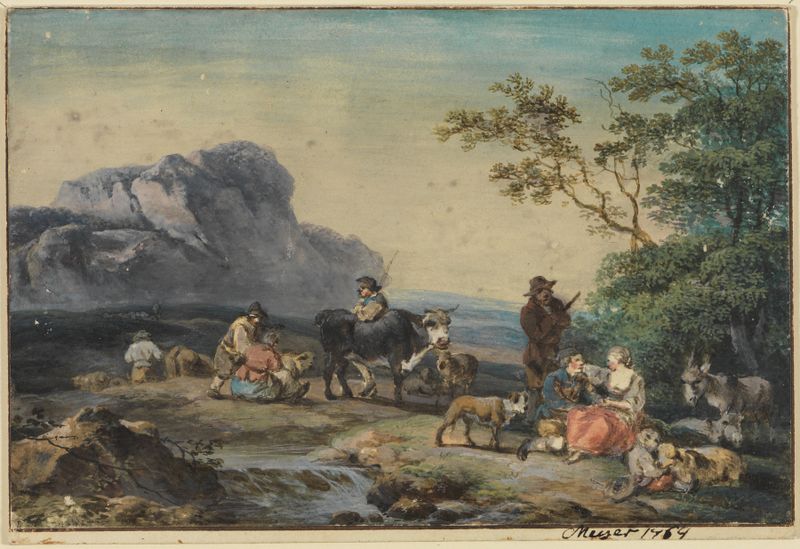
What if beauty was never meant to be finished? In the gentle embrace of twilight, a world unfolds, caught between the known and the unseen, where destiny whispers and waits. Look to the horizon, where the soft gradient of dusk envelops the landscape in hues of lavender and gold. The shepherds, positioned with a calm assurance, guide their flock toward an unseen destination, their figures bathed in the ethereal light of the setting sun. Notice how the delicate brushwork and muted tones evoke a sense of tranquility, while the composition invites your gaze to flow naturally across the canvas, leading you deeper into a landscape that seems both familiar and distant. Hidden in the simplicity of pastoral life lies a profound contrast between the serene beauty of nature and the weight of human responsibilities.
The gentle curves of the rolling hills reflect the shepherds’ connection to the land, yet the encroaching darkness hints at the inevitability of change. This juxtaposition of light and shadow symbolizes the tension between momentary peace and the transient nature of existence, urging us to ponder our own paths as we navigate the journey of life. Painted between 1765 and 1769, this work emerged during a time of artistic transition in Germany. As the Rococo style gave way to the more serious Neoclassical movement, Meyer sought to capture the essence of pastoral beauty and its relationship to humanity.
He painted in a period marked by a growing appreciation for nature as both a subject and a source of inspiration, reflecting the wider cultural shifts toward Romantic ideals that celebrated emotion, individual experience, and the sublime.