Abendläuten (Gebirgsdorf) — History & Facts
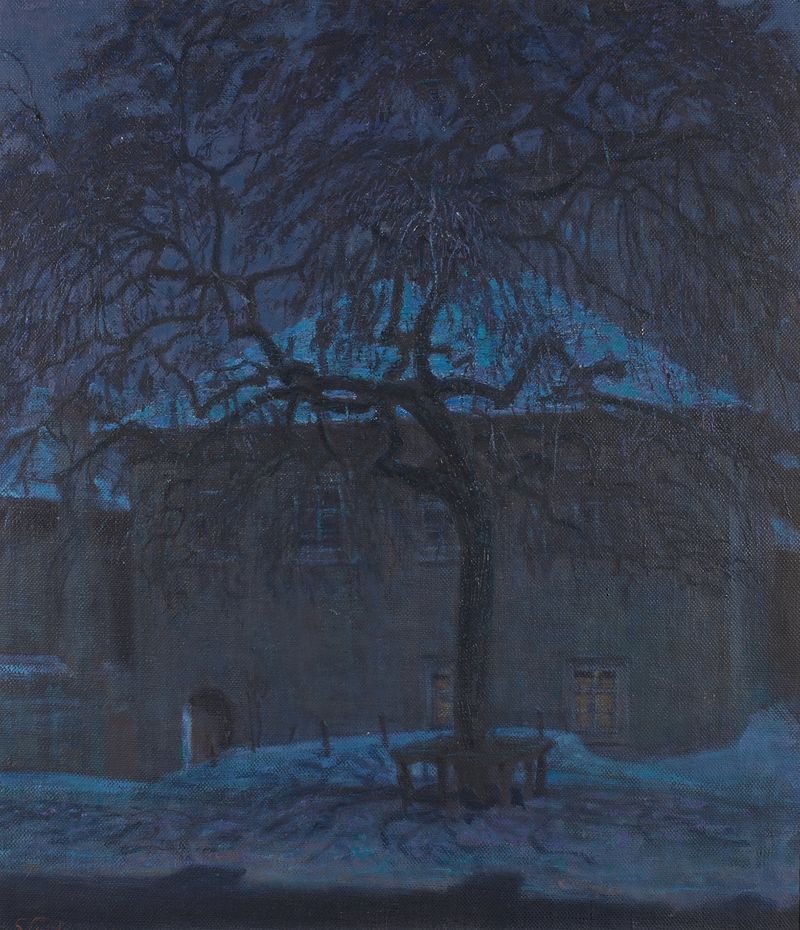
What secret hides in the quiet of the canvas? In Abendläuten (Gebirgsdorf), tranquility envelops a mountain village, yet beneath the surface lies a subtle turbulence that invites contemplation. Look to the foreground, where the gentle contours of the village embrace the base of the imposing peaks in the background. The warm hues of the setting sun bathe the scene in golden light, casting long shadows that create a delicate interplay of light and dark. Notice how the artist contrasts the solidity of the houses with the ethereal, almost ghostly presence of the mountains, suggesting a dialogue between human existence and the vast, chaotic forces of nature that loom beyond. The careful arrangement of houses, each uniquely shaped yet harmoniously aligned, reflects a fragile balance between order and disorder.
The bell tower, a striking focal point, stands resolute yet emits a silent call that resonates with the viewer—a reminder of time's relentless march amid stillness. Small details, like the curling smoke from chimneys and the distant figures yielding to evening rhythms, hint at a deeper narrative of lives intertwined with the landscape, where peace coexists with the unseen chaos of the world outside. Created between 1902 and 1903, this piece emerged during a period of profound change in the art world, as artists like Ernst Stöhr explored themes of realism infused with emotional resonance. Living in Germany, Stöhr was influenced by the burgeoning movement that sought a deeper connection to nature, yet his work often grapples with the tensions between serenity and the looming unpredictability of the environment.
In this canvas, both stillness and chaos find their place, inviting viewers to reflect on their own relationship with the forces that shape their lives.