Mesnerhaus in Melk — History & Facts
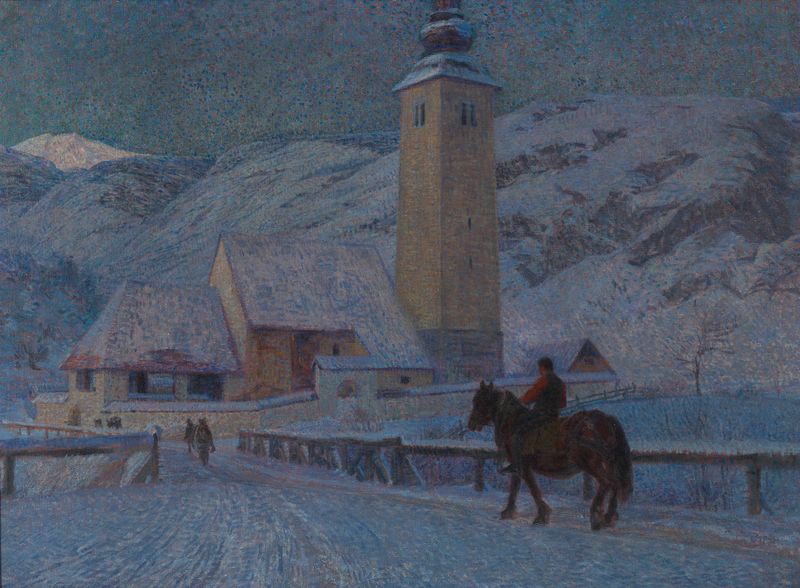
The profound complexities of human emotion often lie hidden beneath the surface, awaiting the gentle touch of awakening. Look to the center of the canvas where the quaint structure of the Mesnerhaus stands resolute against a backdrop of rolling hills and an expansive sky. The artist employs a palette of warm earth tones, contrasting with the cooler hues of twilight, to evoke a sense of serenity. Notice how the light delicately illuminates the roof, casting soft shadows that reveal the textured surfaces of the walls, inviting you to explore the building’s quiet story.
The composition draws your eye upward, suggesting a longing that transcends the physicality of the house itself. Within this picturesque scene lies a deeper narrative. The interplay of light and shadow reflects the duality of existence—comfort and solitude, beauty and isolation. The delicate brushwork captures subtle nuances, revealing an emotional depth that resonates with the viewer, hinting that this serene landscape might hold untold sorrows.
Each element, from the stillness of the house to the expansive sky, speaks to a longing for connection, a yearning that echoes through time. In 1908, Ernst Stöhr painted this work during a period of transformation within the art world, as modernism began to emerge. Living in Austria, Stöhr was influenced by the shifting artistic currents and sought to capture the essence of the familiar landscape around him. This piece reflects not only his mastery of technique but also his ability to convey the undercurrents of emotion that render ordinary moments extraordinary.