Abendstimmung in der Heide — History & Facts
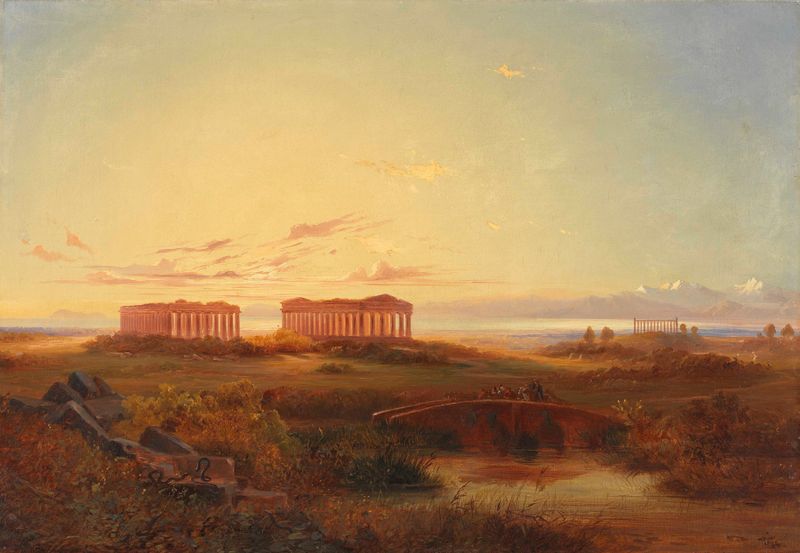
Could beauty survive in a century of chaos? In Abendstimmung in der Heide, the vast emptiness of the heathland beckons the soul to ponder its solitude and serenity. Look to the left at the horizon where a pale, golden light begins to retreat, casting a gentle glow over the sprawling landscape. Notice how the muted greens and browns of the heath contrast with the warm pinks and oranges of the sky. This delicate interplay of color, combined with soft brushstrokes, evokes a sense of quietude, inviting one to pause and reflect.
The horizon stretches infinitely, suggesting both freedom and isolation, while wispy clouds float like ghosts, hinting at fleeting moments in time. The emotional tension lies in the juxtaposition of the tranquil setting against the profound stillness it conveys. Each blade of grass seems to whisper secrets of the past, while the vastness engulfs the viewer, creating a paradox of comfort and loneliness. This emptiness, striking yet peaceful, resonates with the viewer, making one acutely aware of nature's beauty and the void it can represent. Valentin Ruths painted this work in 1878 during a period marked by the rise of Impressionism, a movement he admired for its emphasis on light and atmosphere.
At this time, the artist was exploring the boundaries of landscape painting while seeking to capture the essence of nature in a rapidly changing world. The tranquility in his work stands in stark contrast to the industrial advancements and societal turmoil that surrounded him, reflecting a yearning for a simpler, more contemplative existence.