View of the temples of Agrigento — History & Facts
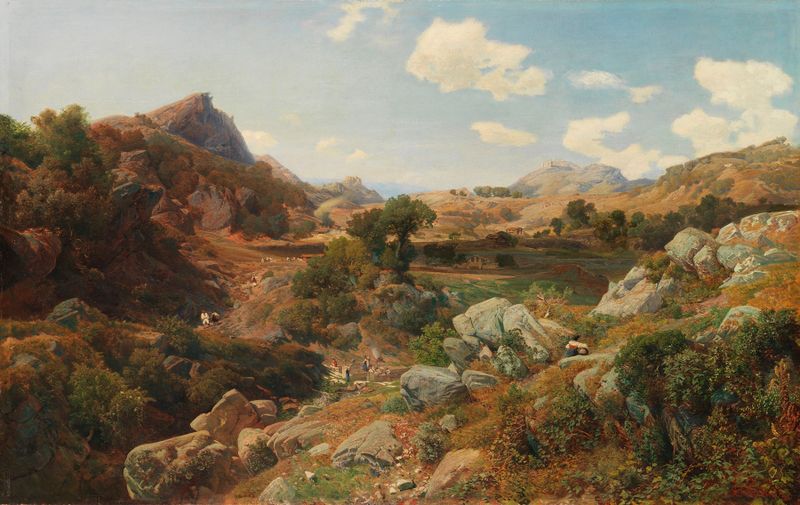
What secret hides in the quiet of the canvas? In a world where ruins whisper stories of the past, View of the temples of Agrigento invites the viewer to ponder the weight of history and the emptiness that lingers in forgotten places. Look to the left at the towering columns, their weathered surfaces catching the light just so, a testament to both time and artistry. The gentle gradient of the sky, transitioning from warm ochre to a soft cerulean, bathes the scene in a serene glow. Notice how the artist employs delicate brushstrokes to depict the lush landscape surrounding the temples, each stroke echoing the solitude that envelops the ruins.
The balanced composition draws the eye towards the temples, strategically placed to evoke a sense of reverence amidst nature’s embrace. Yet, it is in the spaces between the structures where deeper insights emerge. The contrast between the grand architecture and the swathes of empty space speaks to the transience of human endeavor. Each column, while majestic, stands as a reminder of what once was, inviting contemplation on the inevitability of decay.
The careful placement of shadows creates an emotional tension, suggesting both the weight of history and the lightness of absence, encouraging the viewer to reflect on their relationship with the past. In 1855, Ruths painted this scene while traveling through southern Italy, a time when Romanticism was flourishing, celebrating nature and the sublime. The world was undergoing significant change, with industrialization on the rise, yet the artist sought solace in the timeless beauty of ancient ruins. He captured not only the grandeur of the temples but also the melancholy of their solitude, marking a moment of reflective pause in the ever-accelerating march of time.