Above Greenwich — History & Facts
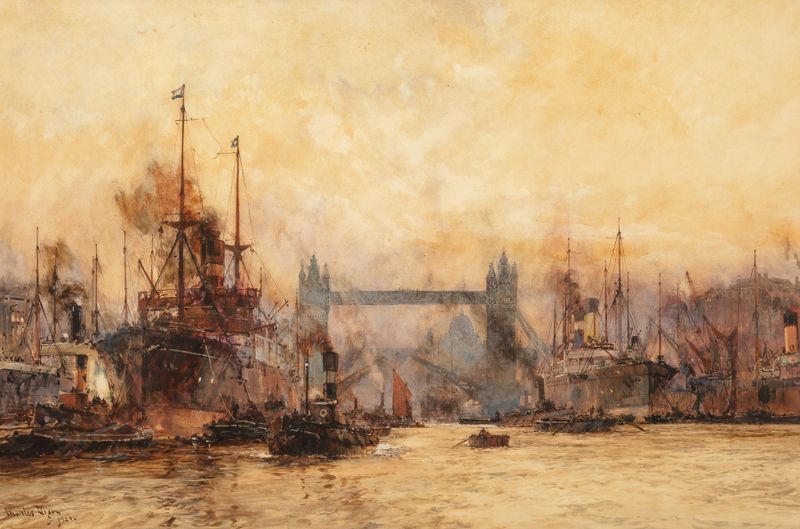
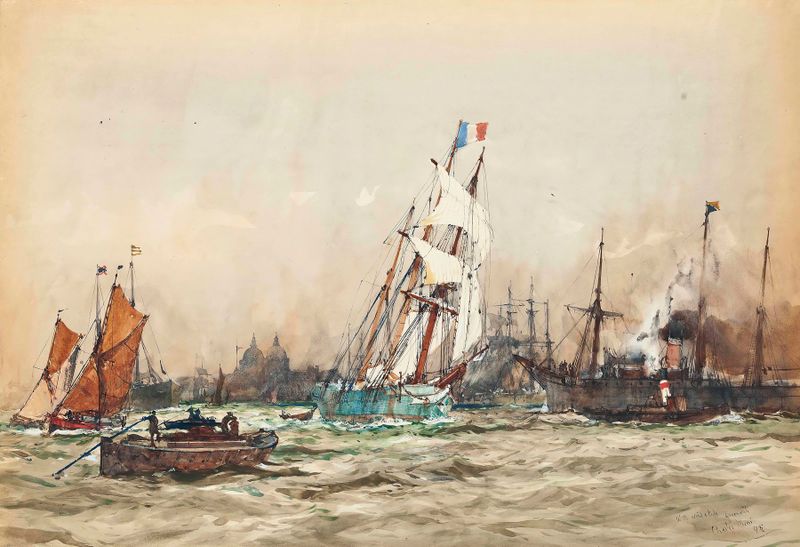
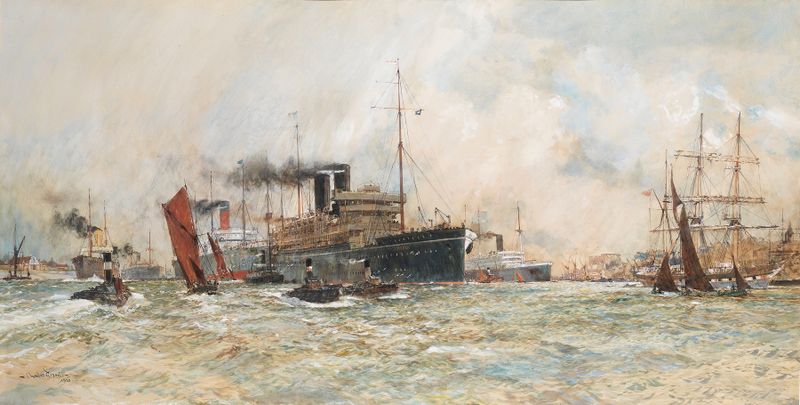
In an age of fleeting moments and transient beauty, the essence of truth stands eternal in art. Look to the horizon where soft blues and greens blend in gentle strokes, inviting the viewer into a serene expanse. Notice how the clouds float lazily above, their cotton-like forms contrasting with the tranquil waters below. The artist employs a delicate palette, harmonizing subtle tones that evoke both nostalgia and peace, drawing the eye toward the distant sailboats that seem to dance upon the water’s surface. Beneath the surface, deeper emotions simmer.
The stillness of the scene belies an undercurrent of timeless longing, a yearning for moments preserved against the relentless march of time. Each brushstroke narrates a story of the past, reflecting a quiet resilience in nature’s beauty — an invitation to pause and reflect amidst a chaotic world. The juxtaposition of the expansive sky with the intimate water below suggests a delicate balance between freedom and confinement. In 1903, the painter created this work while residing in England, a time marked by rapid industrial change and the lingering influence of the Impressionist movement.
Dixon sought to capture the tranquil landscapes that surrounded him, infusing them with a sense of memory and serenity. His dedication to depicting light and atmosphere reflects a broader movement in art that aimed to reconnect viewers with the simple yet profound truths of their surroundings.