With Wind And Tide, Greenwich — History & Facts
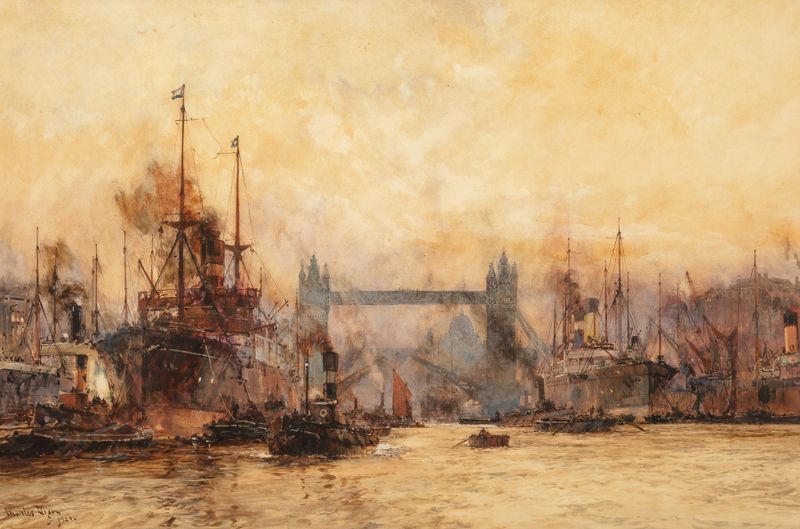
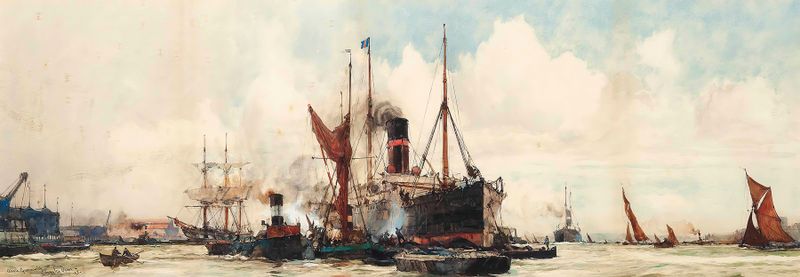
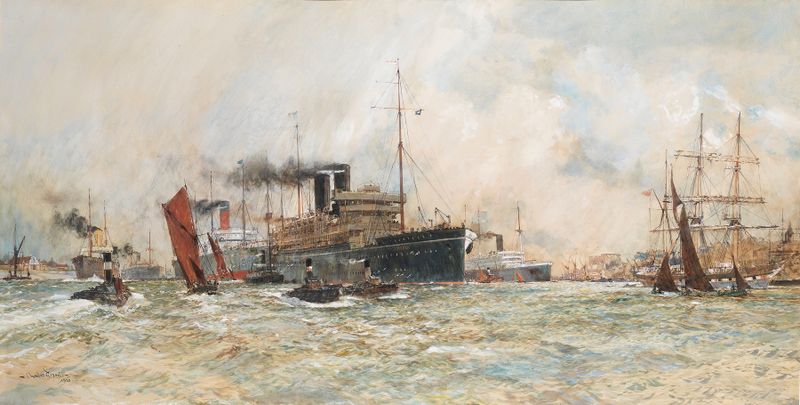
Did the painter know this moment would outlive them? In a world where time ebbs and flows like the tide, the fleeting nature of existence stirs a quiet fear of being forgotten. Look to the left, where the sun paints the sky in delicate hues of orange and pink, reflecting off the water's surface with a captivating shimmer. The sailboats, their billowing sails catching the wind, guide the viewer’s gaze towards the horizon. Notice how the brushwork captures the rhythmic dance of waves, while the figures on the shore appear almost ghostlike, their solid forms softened by the radiant light.
The careful layering of tones evokes a warm sense of tranquility, contrasting sharply with the underlying sense of urgency conveyed by the restless sea. In the foreground, the tension between serenity and anxiety becomes evident. The peaceful scene belies the potential chaos of nature, juxtaposing the calm of the shoreline with the unpredictable energy of the tide. One can almost feel the wind whispering secrets of change, reminding us of our vulnerability to the elements.
The boats, both majestic and fragile, symbolize life’s journey amidst the fear of being swept away by forces beyond our control. In the late 19th century, Charles Edward Dixon was painting in an era marked by rapid industrial change and the waning of traditional maritime life. Created in 1898, With Wind And Tide, Greenwich reflects his fascination with the relationship between humanity and nature as he captured the final remnants of a world on the brink of transformation. This period saw Dixon's deepening interest in coastal scenes, marrying technical prowess with a poignant understanding of time's relentless tide.