
Adam und Eva — History & Facts
The first thing to catch the eye in Adam und Eva by Eduard von Steinle is not the figures themselves, but the charged silence between them—a moment of aftermath, heavy and unspoken. Adam stands rigid, gripping a branch above his head, his gaze turned upward as if searching for an answer beyond the canopy. Beside him, Eve folds into herself, her arms crossed in a gesture of shame and sorrow, her eyes cast down.
The serpent lingers at their feet, its head raised in quiet triumph, while a small animal—half hidden—watches the scene unfold. Every leaf and tendril seems to press in, amplifying the sense of enclosure and consequence, as if nature itself bears witness to their fall. Created in 1867, this work belongs to a century obsessed with retelling ancient stories in new visual languages. In the age of Romanticism and early Symbolism, artists like Steinle drew on biblical themes not just for religious instruction, but to probe the depths of human emotion and fate.
Such paintings were often commissioned for private collections or as moral exemplars for the educated classes of Europe—here, the painting was catalogued in the collection of Count von Schack in Munich, a noted patron of German art. History has kept few traces of this particular canvas, but its careful rendering and somber mood invite viewers to linger, searching for meaning in every shadow and gesture.
More Artworks by Eduard von Steinle

Edward Jakob von Steinle - Die Loreley (Entwurf) - 11698 - Bavarian State Painting Collections, Photo
Eduard von Steinle
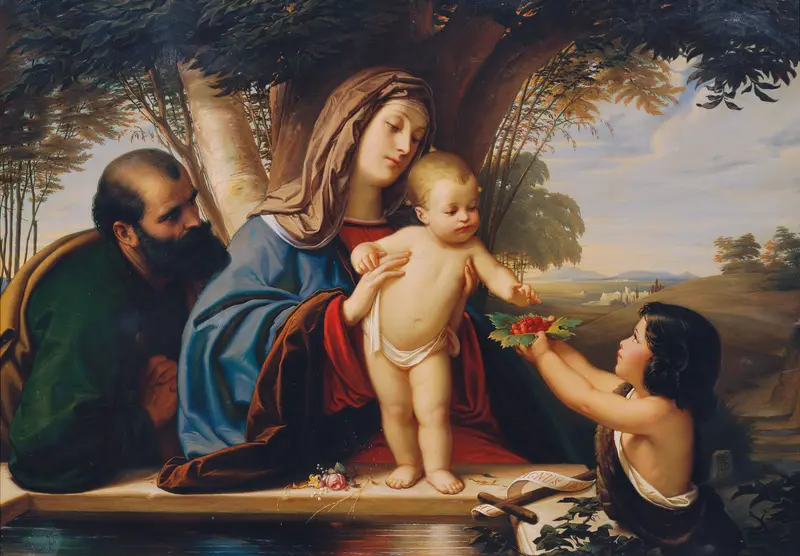
Eduard Jakob von Steinle Heilige Familie mit Johannesknaben 3261 Kunsthistorisches Museum
Eduard von Steinle
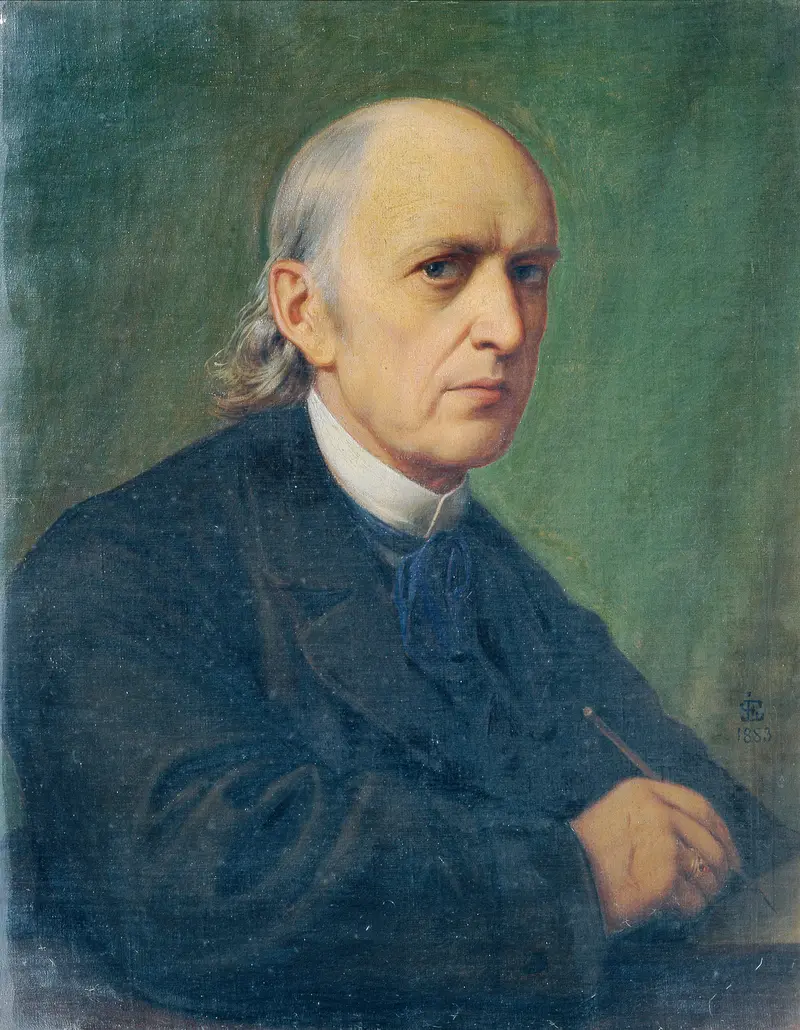
Eduard Jakob von Steinle Selbstbildnis 3578 Kunsthistorisches Museum
Eduard von Steinle





