After a Storm, Amagansett — History & Facts
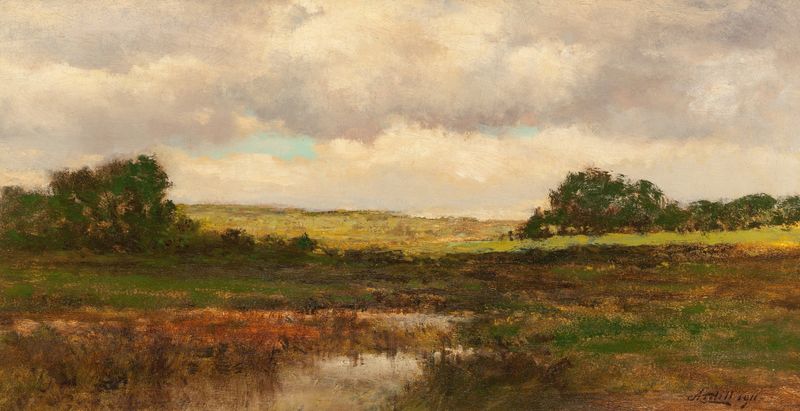
In the aftermath of chaos, innocence finds its voice, whispering secrets through the stillness that blankets the scene. A world washed clean emerges, revealing the fragile beauty that lies beneath disruption. Look to the left at the gentle roll of the hills, where soft greens and muted browns oscillate in harmony. The sky, a delicate blend of blues and grays, captivates the eye as it spills over the horizon, echoing the fresh promise of renewal.
Notice the dappled light filtering through the trees, casting playful shadows that dance upon the ground. This careful orchestration of color and light draws the viewer deeper into the serene aftermath, inviting contemplation of nature’s cycle of turmoil and tranquility. As your gaze wanders, the subtle contrasts come into focus: the remnants of the storm linger in the air, a palpable tension between chaos and calm. The lush landscape stands in stark relief to the darkened clouds still retreating at the edge of the canvas, symbolizing resilience and rebirth.
Here, we confront the innocence of nature, which endures despite the tempests that threaten its existence. Each element serves as a reminder of the delicate balance between destruction and the renewal that follows, urging us to reflect on our own experiences of vulnerability and hope. In 1912, Arthur Turnbull Hill painted this work during a period when he was deeply immersed in the American Impressionist movement. Living in New York, he explored the interplay of light and color, capturing the unique beauty of the East Coast landscapes.
The era was marked by a growing interest in the natural world as artists sought to convey the profound emotional connections that could be evoked through their brushwork.