Cloud Shadows — History & Facts
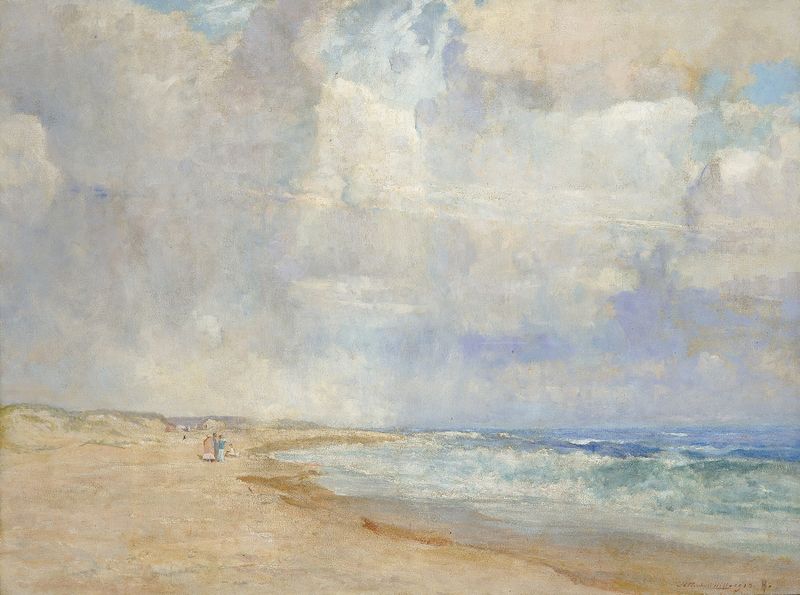
Can paint confess what words never could? In Cloud Shadows, the artist weaves an intricate tapestry of fate, revealing the silent conversations between earth and sky, a dialogue often lost in mere words. Look to the center of the canvas where deep, rolling clouds converge, their shadows draping over the landscape like a shroud of anticipation. The brushwork is both fluid and precise, allowing the viewer to feel the weight of the atmosphere while the light dances subtly across the terrain. The palette is rich yet muted, with shades of gray and blue intertwining, evoking a sense of both calm and unease, as if the heavens are about to reveal their secrets. Delve deeper, and you may notice the delicate interplay of light and shadow, which contrasts not only the physical elements of the scene but also hints at an emotional duality — the promise of rain, perhaps, or the impending storm of change.
The distant horizon, bathed in a faint glow, suggests hope or destiny, while the darkened foreground may symbolize the weight of what lies ahead. Each element breathes life into the painting, embodying the tension between expectation and reality. In 1911, Arthur Turnbull Hill painted this piece during a time of personal transition. He was in the midst of exploring the nuances of landscape painting, seeking ways to express inner truths through the natural world.
This period marked an evolution in modern art, as artists like Hill sought to convey emotions and ideas beyond mere representation, reflecting broader cultural shifts and human experiences that echoed through their creations.