Afterglow — History & Facts
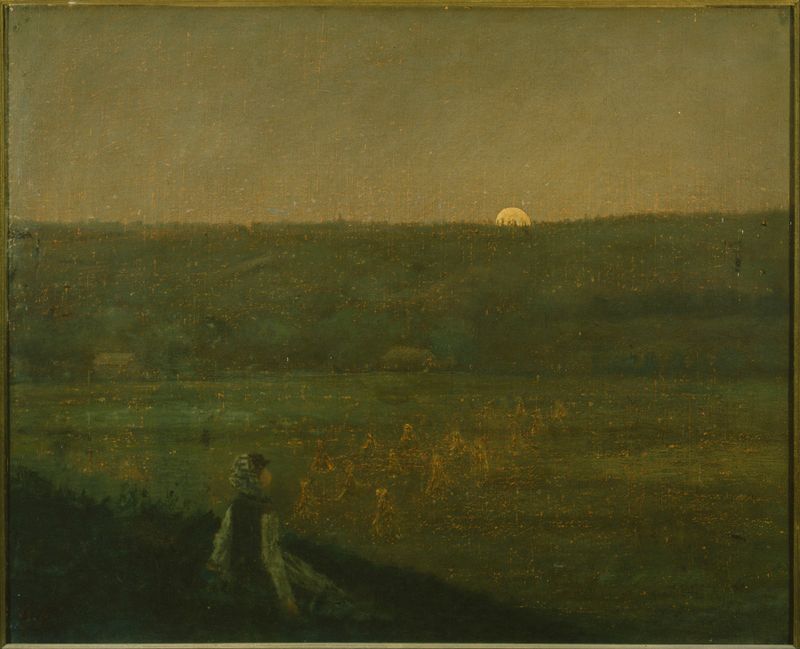
What secret hides in the quiet of the canvas? In the stillness of George Fuller's Afterglow, transcendent beauty emerges from the interplay of light and shadow, inviting us to explore the depths of our own introspection. Look to the left at the soft curve of the horizon, where delicate hues of warm amber blend seamlessly into cool blues. The gentle gradient suggests the fading of day into night, a moment caught in time. The figures, though outlined with restraint, draw the eye; their forms are almost ethereal, bathed in the soft illumination that defines their existence.
Each stroke speaks to the artist’s meticulous attention to light, creating a visual symphony that balances presence and absence. Delve deeper into the subtleties of this piece, and notice how the juxtaposition of the warm afterglow against the cooler tones evokes a sense of longing and nostalgia. The figures’ expressions, serene yet contemplative, form a contrast between the serenity of their surroundings and the inner turmoil that may lie beneath. This tension between tranquility and emotional depth encapsulates a universal human experience, resonating with anyone who has ever felt the weight of a fleeting moment. Fuller created this artwork during a pivotal period in his career, around the late 19th century, a time when the art world was exploring the boundaries of realism and impressionism.
His focus on capturing light and the essence of a moment was a reflection of broader movements in art that valued subjective experience. It was in this evolving landscape that he sought to convey the profound tranquillity found in nature and the human spirit, leaving a lasting mark on the viewer’s soul.