Twilight on the Prairie — History & Facts
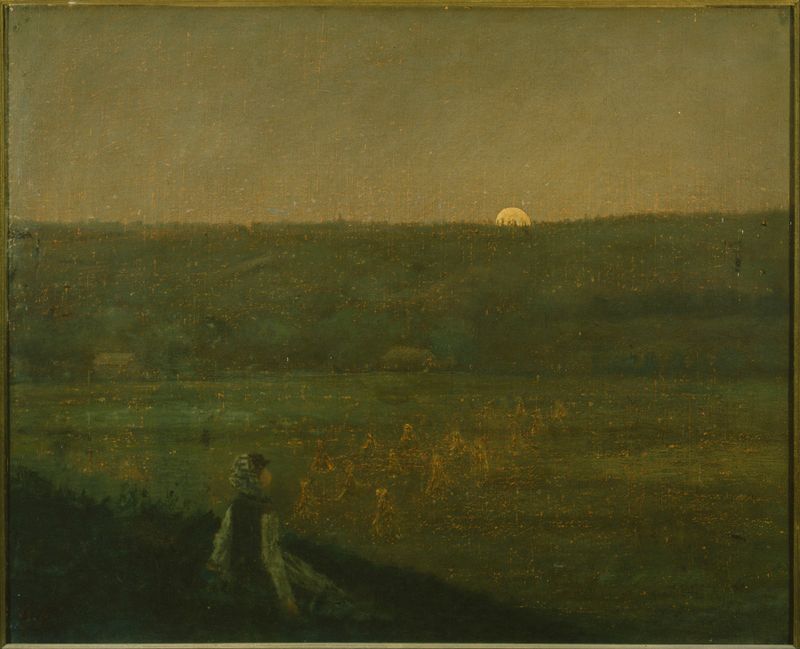
In the hushed twilight, dreams flicker like fireflies, hovering just out of reach, tantalizing yet elusive. Focus first on the ethereal landscape, where the deep blues of the sky melt into warm hues of amber and gold at the horizon. The brushstrokes seem to dance, creating gentle waves of grass that sway under the weight of an invisible breeze. Notice how the fading light wraps around the distant hills, casting an enchanting glow that suggests both beauty and melancholy, as if the prairie holds secrets longing to be whispered. Yet, beneath this serene exterior lies an undercurrent of unease.
The golden fields seem to stretch endlessly, evoking a sense of isolation that contrasts sharply with the vibrant colors. Shadows gather at the edges, hinting at the darker themes of longing and loss, while the vastness of the landscape mirrors the depths of human emotion. Each element, from the delicate play of light to the haunting emptiness, weaves together a tapestry of dreams and despair. Created in a period of both personal and artistic exploration, the artist painted this piece during his time in the late 19th century, a moment when the American landscape began to be celebrated in art.
Fuller was deeply influenced by the Transcendentalist movement and the beauty of the natural world, reflecting both his admiration for the prairie and his own internal struggles. Art was evolving, and in those quiet moments of twilight, he captured something timeless, wrestling with themes that would resonate long after the paint dried.