
Algiers, Cecilia in pink — History & Facts
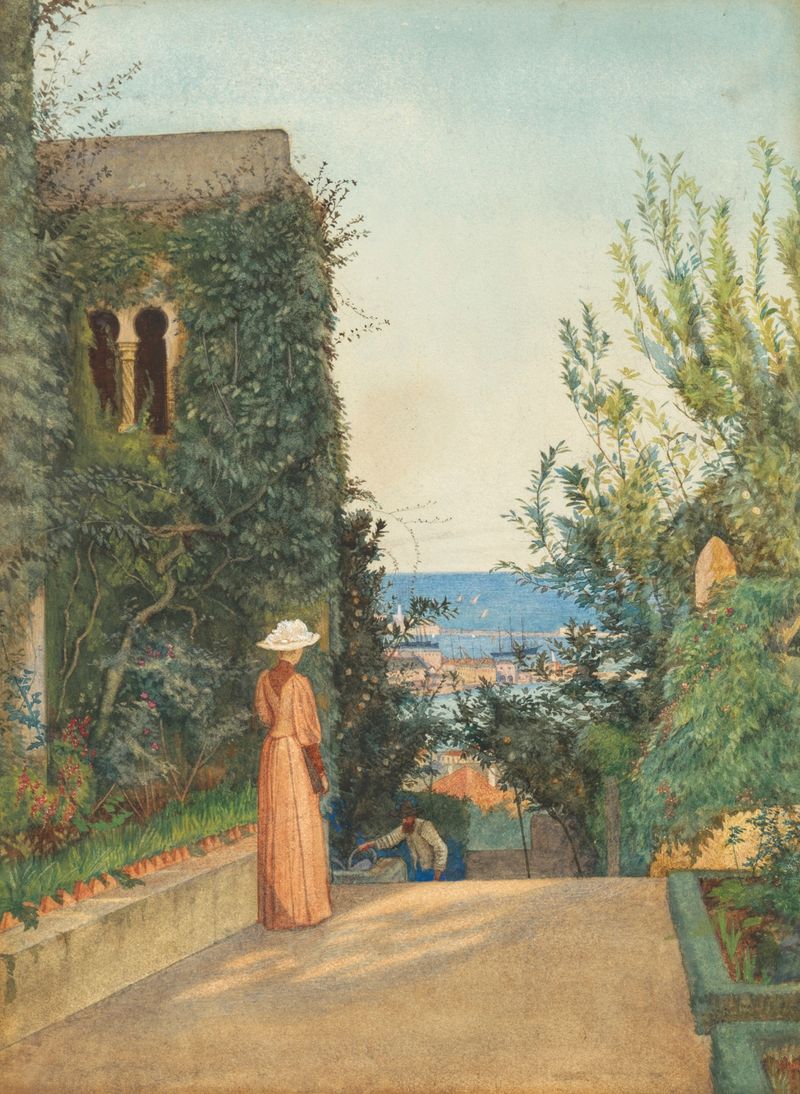
In the stillness of the canvas, hope emerges not through loud gestures but in the delicate interplay of hue and light. It beckons us to look closer, to reveal the layers of emotion that lie beneath the surface. Look to the center where the figure of a young woman, draped in soft pink, captures the eye. Her presence radiates warmth against a backdrop of muted tones, creating a gentle contrast that draws us in.
Notice how the light dances delicately around her, illuminating the folds of her dress and the grace of her posture. The artist’s choice of a subdued palette imbues the scene with an air of intimacy, inviting us to pause and reflect on the quiet strength embodied in her expression. Yet, beneath the surface, a tension simmers. The choice of pink, often associated with innocence and tenderness, contrasts with the shadowy hints lingering in the background, suggesting a complexity in her world.
The surrounding colors, both cool and warm, evoke a sense of duality — a balance of hope and unspoken longing. Each brushstroke whispers stories of aspirations entwined with the weight of reality, as if revealing a moment of quiet contemplation amid life’s chaotic beauty. At the time of creation, the artist was navigating the turbulent waters of the late 19th century, a period marked by the rise of aesthetic movements. Painting Algiers, Cecilia in Pink amid personal and societal shifts, he sought to capture the essence of his experiences in both the natural world and human emotion.
This work reflects his keen interest in depicting serene beauty, a testament to the enduring allure of color in expressing the nuances of hope.
More Artworks by George Howard, 9th Earl Of Carlisle
Browse all →

More Portrait Art
Browse all →
Las meninas
Diego Velázquez

Self-portrait with a Bandaged Ear and Pipe
Unidentified artist

Girl with a Pearl Earring
Johannes Vermeer

The Sampling Officials of the Amsterdam Drapers’ Guild, Known as ‘The Syndics’
Rembrandt van Rijn

The Hundred Guilder Print: the man seen on the back in the lower left corner
Rembrandt van Rijn

Portrait of Dr Gachet
Vincent van Gogh