Along the Jordan River (recto) — History & Facts
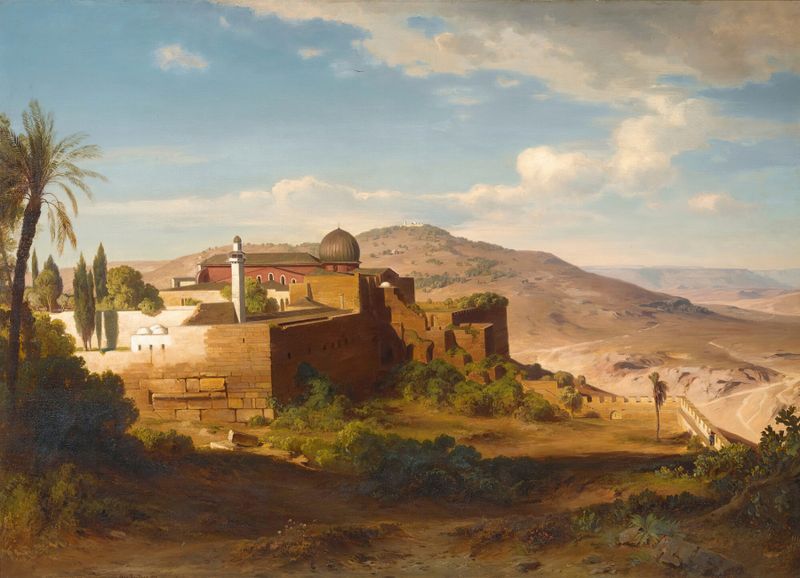
When did color learn to lie? In the whispers of brushstrokes, the hues of the landscape unveil secrets of both beauty and memory, hiding truths beneath vibrant surfaces. This delicate interplay of color calls into question the legacy of nature, inviting us to explore how art interprets the world around us. Focus on the gentle curve of the river that dominates the canvas, inviting your gaze to follow its shimmering path through the pastoral setting. Notice how Löffler layers greens and blues, the light reflecting off the water, creating a sense of movement and life.
The trees frame the scene, their leaves a tapestry of textures that enhance the tranquil atmosphere. Each stroke seems to breathe warmth, yet hints at an underlying melancholy, as if the artist is balancing between reverie and reality. This work speaks to the contrasts of serenity and transience. The river, often a symbol of time’s passage, flows steadily, suggesting continuity even as moments fade into the past.
The lush foliage represents nature's richness, yet there lies a subtle tension—a reminder of the impermanence that colors our experiences. Each detail, from the shimmering water to the stillness of the landscape, evokes a deep yearning for connection to our own histories and the legacies we leave behind. August Löffler painted this scene between 1849 and 1850 during a period marked by a fascination with Romanticism in Europe. Living in Germany, Löffler was influenced by the growing interest in nature and the sublime, reflecting a shift toward capturing not just the visual but the emotional essence of landscapes.
The work stands as a testament to his exploration of color, light, and the narratives woven into the natural world, inviting viewers to ponder their place within it.