
The Al-Aqsa Mosque, Jerusalem — History & Facts
Could a single brushstroke hold eternity? In The Al-Aqsa Mosque, the viewer is drawn into a moment where architecture and faith intertwine, revealing the profound beauty of a sacred space. Look to the upper section of the canvas, where soft light glimmers off the intricate domes and arches, inviting you to explore the gentle curves and delicate details. The artist’s use of cool blues and warm golds creates a harmonious balance, guiding your eye from the foreground, where people are depicted in thoughtful contemplation, to the distant skyline. Notice how the shadows play beneath the arches, revealing a sense of depth that makes the sacred site feel both inviting and imposing. At first glance, the mosque appears to be a serene monument, yet the nuanced expressions of the figures in the foreground suggest an underlying tension of reverence and longing.
The interplay of light and shadow not only highlights the architectural grandeur but also hints at the contrasting emotions felt by those gathered in this space of spirituality. Each brushstroke reveals not just the physicality of the mosque but also the weight of history and the enduring nature of faith, inviting contemplation of the layers of meaning that transcend the canvas. August Löffler painted this piece in 1859 while stationed in Jerusalem for his artistic pursuits. At this time, the art world was grappling with Romanticism's emotional depth, and Löffler sought to capture the essence of his surroundings through meticulous detail and vibrant color.
His experience in the region and the cultural significance of the mosque provided him with a unique perspective, emerging during a period of great artistic exploration and a fascination with the East.
More Artworks by August Löffler
Browse all →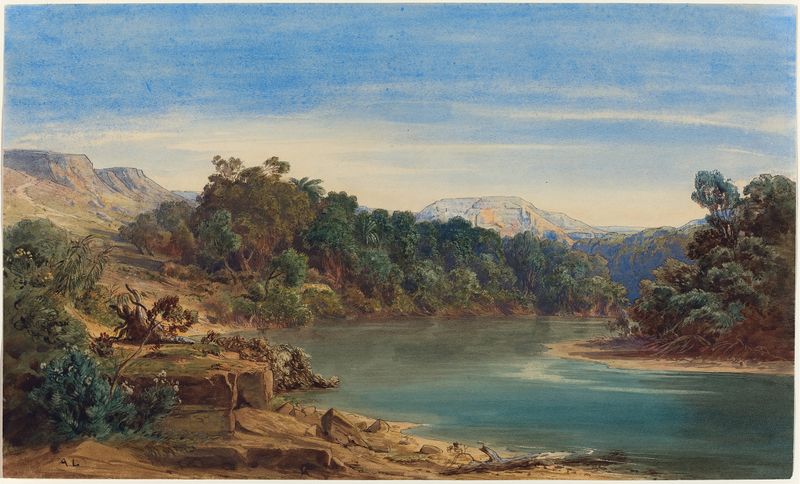
More Architecture Art
Browse all →
The statue of Liberty
Frédéric Auguste Bartholdi

View of Houses in Delft, Known as ‘The Little Street’
Johannes Vermeer

View of Houses in Delft, Known as ‘The Little Street’
Johannes Vermeer

The Cathedral in Rouen. The portal, Grey Weather
Claude Monet

The yellow house
Vincent van Gogh

The Church in Auvers-sur-Oise, View from the Chevet
Vincent van Gogh