Alpheus and Arethusa — History & Facts
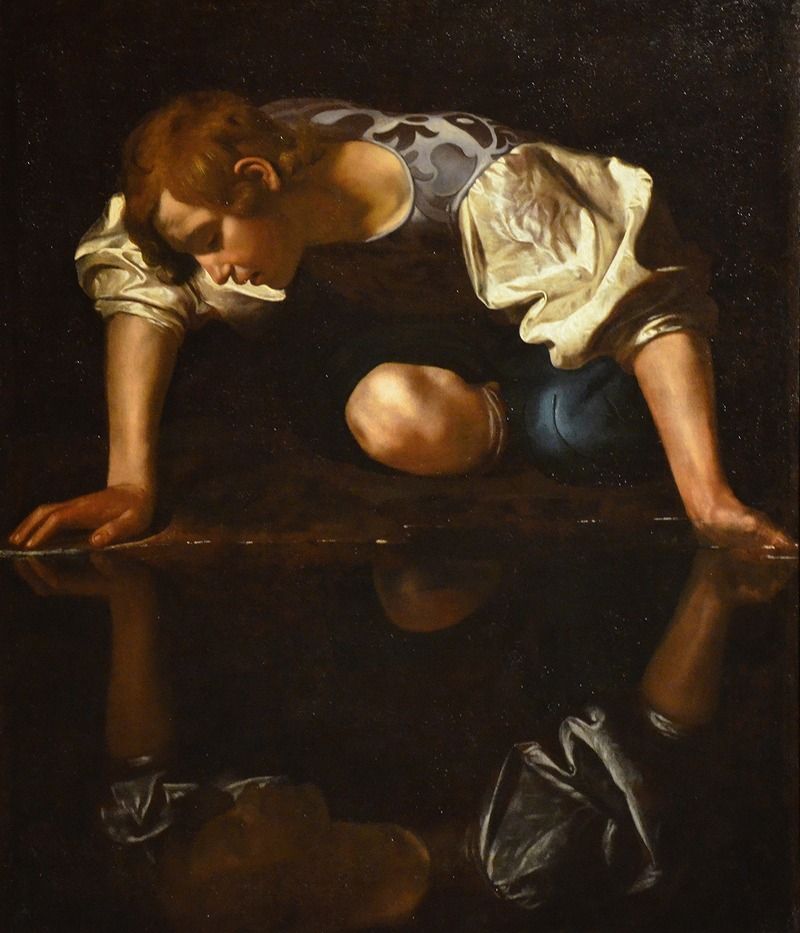
Is this a mirror — or a memory? The delicate interplay between past and present pulses through every brushstroke of this evocative piece, whispering to the viewer’s heart with an earnest yearning. Look to the left at the tranquil figure of Arethusa, her flowing garments rendered in soft, ethereal hues that blend tenderly into the landscape. The luminous water reflects her beauty, creating a sense of unity between her and the natural world. Now, focus on Alpheus, who emerges from the shadows, his expression a complex mixture of desire and desperation as he reaches out towards her, stretching the boundaries of longing.
The artist’s masterful use of light enhances the emotional tension, illuminating the figures while casting a veil of darkness around their surroundings. Yet, beyond the initial allure lies a deeper narrative. The shimmering water acts not only as a mirror but as a barrier, symbolizing the distance between desire and fulfillment. Arethusa’s serene demeanor juxtaposes Alpheus’s fervent pursuit, highlighting the often-painful experience of unreciprocated love.
The subtle brushwork and muted color palette evoke nostalgia, suggesting that this moment captures both the beauty of connection and the ache of separation. In 1626, during a period when Baroque art flourished across Europe, the artist created this work amidst a climate rich in emotional expression and dramatic scenes. Van Uyttenbroeck was influenced by the mythological themes that captivated artists of his time, yet he infused his interpretation with a personal touch, reflecting his own experiences of longing and desire. This painting stands as a testament to the era's exploration of complex human emotions, inviting viewers to reflect on their own memories of yearning.