Alsfeld in Upper Hessia — History & Facts
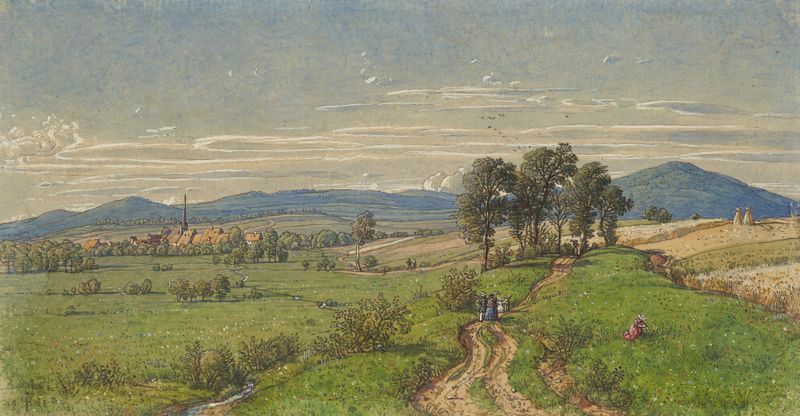
In the heart of every stroke lies a truth waiting to be uncovered, an unspoken narrative captured in the stillness of time. Focus on the quaint rooftops that crest the horizon, bathed in a gentle, golden light that imbues the landscape with warmth. Notice how the artist has layered hues of blue and green, bringing the hills of Upper Hessia to life while harmonizing with the soft murmurs of the sky. The tiny village, nestled within the embrace of nature, invites the viewer to explore its streets, where each building stands as a testament to a moment lost in memory. The interplay of shadow and light throughout the scene suggests a moment of quiet reflection, as if the village itself holds secrets of its past.
The subtle contrasts between the vibrant colors and the muted tones evoke a sense of nostalgia, drawing upon the emotional weight of forgotten voices. Small details, like the wispy clouds tracing the skyline, hint at a fleeting tranquility—a reminder that beauty lies in transience. In 1900, Peter Becker was immersed in the artistic revival of Germany, grappling with the influences of Impressionism and the emerging Modernist movements. Living in a time of rapid change, he sought solace in the picturesque landscapes of his homeland, reflecting a profound connection to the natural world while responding to the cultural shifts around him.
This work stands as a bridge—anchoring the past while anticipating the future of artistic expression.