Ansicht von Unterliederbach — History & Facts
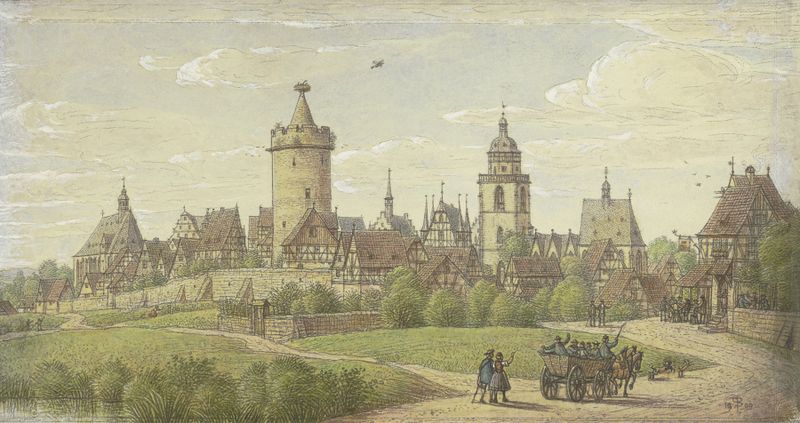
In the quiet of this landscape, the heartbeats of those who once thrived here echo softly beneath the surface of time, hinting at loss and nostalgia. Look to the foreground where gentle, rolling hills cradle a small village, bathed in the warm glow of an early evening sun. The soft brushstrokes create a tapestry of greens and golds, inviting the viewer to wander through the undulating fields. Notice how the light delicately illuminates the rooftops, casting long shadows that elongate like memories stretching into the past.
In the distance, the horizon blurs softly, merging earth and sky in a gentle embrace that feels both hopeful and melancholic. The painting embodies a poignant contrast between life and absence, with the vibrant colors of the landscape serving as a backdrop to an unspoken sorrow. Each house stands as a testament to stories untold, while the serene nature surrounding them whispers of time’s relentless passage. The stillness of the scene invites reflection on what has been lost, evoking a collective grief for fleeting moments that slip through our fingers like grains of sand. In 1861, Peter Becker painted this work during a period marked by rapid industrial change in Europe.
Living in a world on the brink of transformation, he captured the delicate balance between the encroaching modernity and the serene, pastoral life that was quickly vanishing. His work reflects both a personal and cultural yearning for the simpler times that seemed to be fading away amidst the bustling march of progress.