Am Gosausee — History & Facts
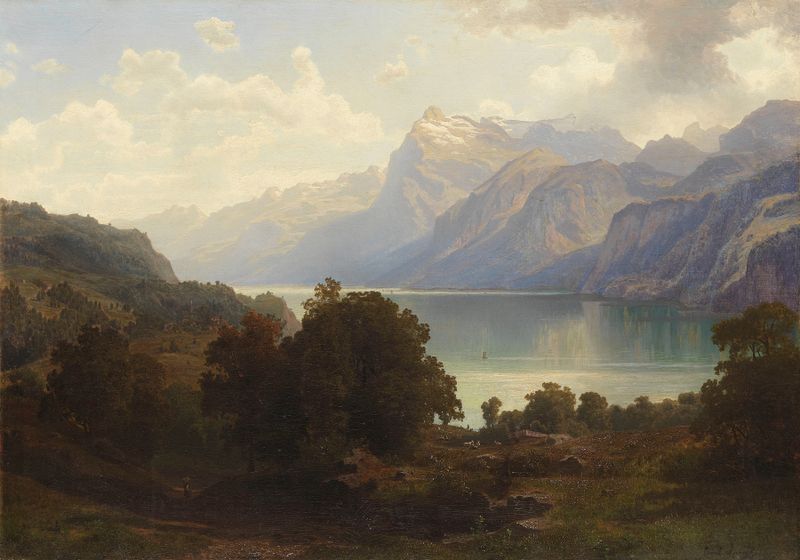
Who listens when art speaks of silence? In the poignant stillness of Am Gosausee, the viewer is invited to contemplate the decay of nature and time as it unfolds quietly before us. Look to the serene water at the center of the canvas, where the reflection of the surrounding mountains glimmers like a forgotten memory. The gentle ripples distort the image just slightly, suggesting a world in transition. Notice how the subdued palette of blues and greens conveys both tranquility and melancholy, while light dances delicately on the surface, illuminating the edges of the trees that border the lake, hinting at their inevitable decline. Within this peaceful yet haunting landscape lies a deeper narrative of impermanence.
The mountains loom majestically, yet their presence carries an air of fragility, as if they, too, will eventually succumb to the ravages of time. The contrast between the vibrant greenery and the encroaching decay lurking in the shadows invites contemplation of life’s cycles. This duality mirrors our own experiences, evoking an emotional tension between beauty and loss. Carl Jungheim painted Am Gosausee between 1850 and 1880, during a period of profound artistic exploration in Europe.
This era saw Romanticism flourishing, with artists seeking to express the sublime and the emotional resonance of nature. Jungheim, influenced by this movement, captured not only the aesthetic beauty of the Austrian landscape but also a premonition of its transience, reflecting the artist’s own sensitivity to the passage of time and the inevitability of change.