Am Vierwaldstättersee mit Blick auf das Pilatusmassiv — History & Facts
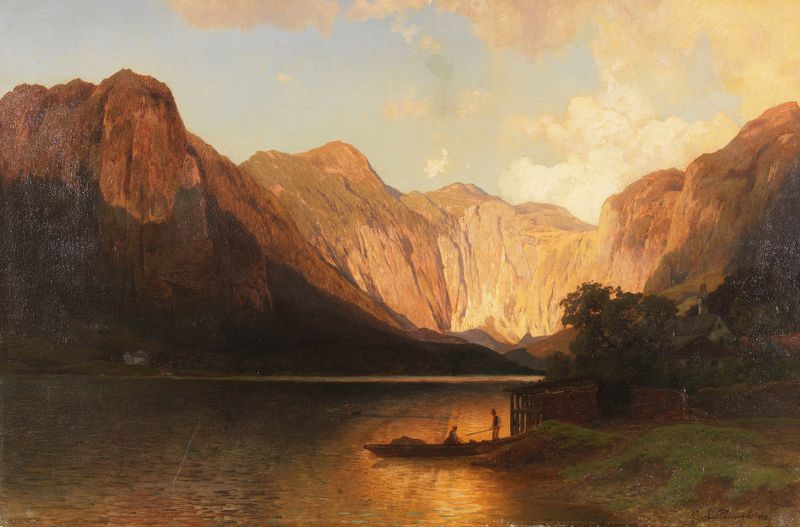
When did color learn to lie? In a world where truth often feels obscured, this painting invites us to question our perceptions and the serenity of nature. Look to the left where the gentle undulations of the landscape cradle the lake, its still surface mirroring the sky above. Notice how the artist captures the reflection of the majestic Pilatusmassiv in shimmering blues and greens, creating an almost ethereal quality. The soft brushwork blends seamlessly, making the scene feel alive yet dreamlike, while the delicate interplay of light and shadow suggests an idyllic moment suspended in time. The contrasts within the composition reveal deeper tensions: the stark, rugged peaks looming in the background stand in stark juxtaposition to the serene, inviting waters.
This duality hints at nature's unforgiving power versus its tranquil beauty, each element resonating with a truth that transcends the visual. Subtle hints of warmth in the foreground brush against the cooler tones of the mountains, suggesting an underlying harmony despite the tensions that lie within. Created between 1860 and 1870, this work emerged during a time when Carl Jungheim was deeply engaged in depicting the pristine landscapes of Switzerland. The Romantic movement was flourishing, emphasizing the sublime aspects of nature, yet the artist faced the challenges of a changing art world, where traditional techniques began to coexist with emerging modern styles.
This piece encapsulates a moment of reflection, both personal and artistic, bridging the past with the evolving narrative of natural beauty.