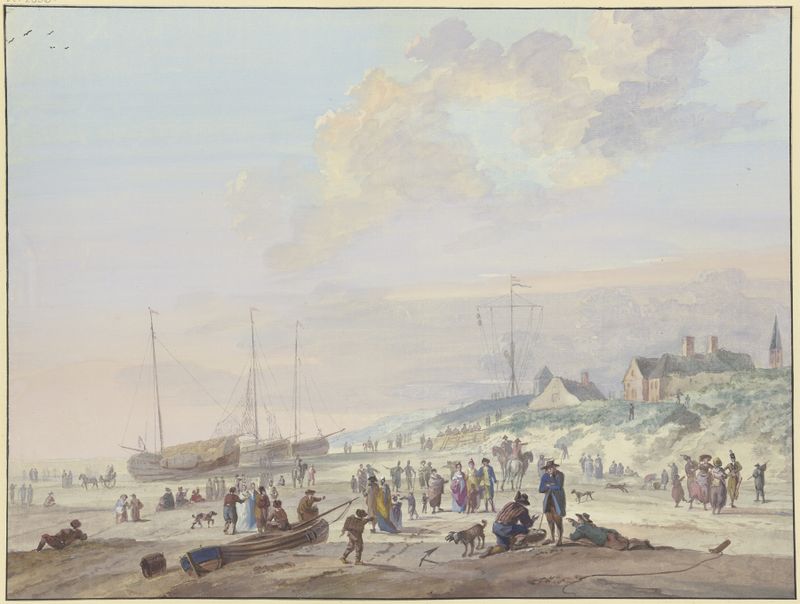
Am Strande liegen Barken, ein Boot mit vielen Personen, worunter einiges Militär, fährt dem Lande zu — History & Facts
Within the layers of paint lies a narrative of conflict and resilience that often goes unseen. The brushstrokes encapsulate the essence of humanity caught in the crossfire of chaos and hope, urging the viewer to confront the unsettling truths that lurk beneath the surface. Look to the foreground, where an array of figures clustered around a small boat immediately draws your gaze. The contrast between the somber tones of the water and the muted colors of the soldiers’ attire heightens the palpable tension in the scene.
The way light dances on the waves hints at the duality of the moment—an impending arrival shadowed by uncertainty, yet illuminated by faint glimmers of hope. Each figure’s posture conveys a mixture of anticipation and unease, suggesting that the quiet before the storm has settled heavy on their shoulders. Delve deeper, and you’ll notice the subtle interplay between military presence and civilian vulnerability, emblematic of the larger struggles faced by society. The boat, laden with passengers, becomes both a vessel of escape and a harbinger of reality—a duality that evokes the violence of war while simultaneously capturing the spirit of survival.
Small details, like the expressions of the figures and the tension in their limbs, communicate a shared anxiety, reflecting the collective weight of their lives hanging in balance. Created during a tumultuous period, this work emerged from the mind of the artist, who was grappling with the shifting tides of art and society. Although the exact date remains unclear, it is widely recognized that the artist operated within a context marked by the struggles of his generation—a time when art was increasingly seen as both a refuge and a mirror to the world's darker facets. The painting stands as a testament to the resilience of the human spirit amidst chaos, captured in a moment forever suspended in time.