
Amphitheatre — History & Facts
What secret hides in the quiet of the canvas? In Amphitheatre, silence speaks volumes, inviting us to explore the delicate interplay between nature and human ingenuity. Look to the right at the elegantly arched structures, their stoic forms commanding the eye against a backdrop of lush greenery. Notice how the light falls upon the towering columns, casting gentle shadows that echo the serenity of the scene. The balanced composition, with a horizon that stretches infinitely, invites contemplation, while the muted color palette of greens and earth tones enhances the tranquility of this gathering place, seemingly untouched by time. Delve deeper, and you may uncover the emotional tensions at play.
The amphitheater stands as a monument to human achievement, yet it is cradled by the surrounding landscape, reminding us of nature's grander design. The absence of people conveys a poignant solitude, suggesting the fleeting nature of glory and the persistence of quietude. Each detail—the gentle rise of the earth, the softness of the sky—whispers of forgotten stories and the echoes of voices long since silenced. In 1768, as Johann Gottlieb Hackert painted this scene in Italy, he was amidst a burgeoning appreciation for the picturesque.
The Enlightenment's influence loomed large, and the merging of art and nature was fervently pursued by many artists of his time. Hackert, captivated by classical ruins and the beauty of the Italian landscape, sought to capture the harmony between man-made structures and the natural world, laying the foundation for future movements that would explore this delicate balance.
More Artworks by Johann Gottlieb Hackert
Browse all →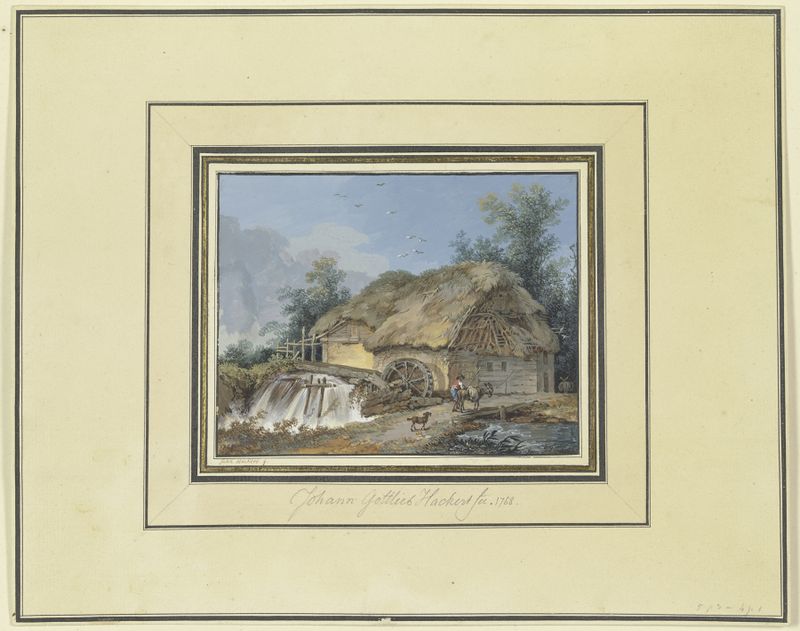
More Architecture Art
Browse all →
The statue of Liberty
Frédéric Auguste Bartholdi

View of Houses in Delft, Known as ‘The Little Street’
Johannes Vermeer

View of Houses in Delft, Known as ‘The Little Street’
Johannes Vermeer

The Cathedral in Rouen. The portal, Grey Weather
Claude Monet

The yellow house
Vincent van Gogh

The Church in Auvers-sur-Oise, View from the Chevet
Vincent van Gogh