Strohgedeckte Wassermühle, zu der ein Bauer mit Esel und Hund kommt — History & Facts
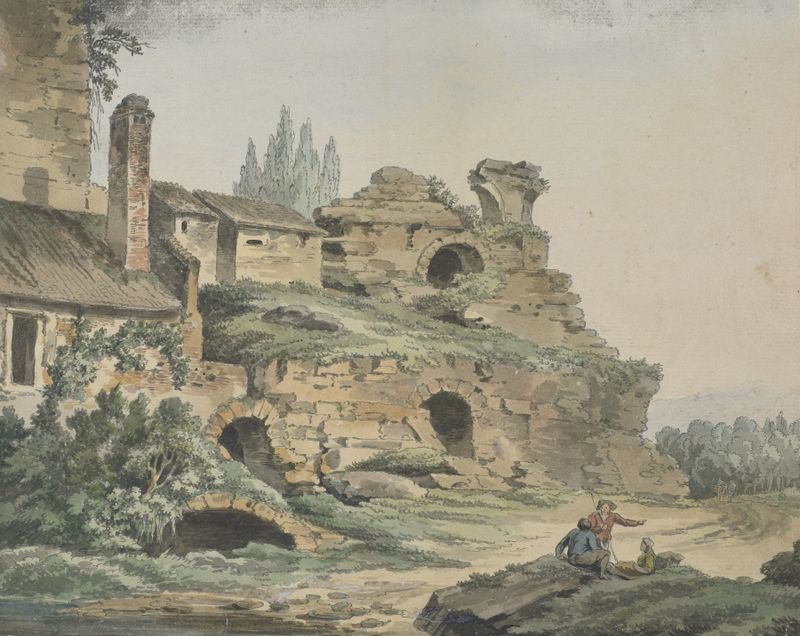
In this peaceful moment, time feels layered, suspended between the labor of nature and the simplicity of life. Focus first on the delicate interplay of light and shadow that bathes the straw-roofed mill, casting a serene glow that beckons the eyes across the canvas. The mill, nestled among the verdant landscape, stands as a testament to human resilience, while the farmer, accompanied by a humble donkey and an attentive dog, traverses the path leading him home. Notice the soft earth tones that harmonize the scene, evoking a sense of calm and inviting contemplation about the passage of time and the quiet rhythms of rural existence. The contrasts in the painting are profoundly evocative.
The robust strength of the mill looms against the frailty of the figures, suggesting the enduring nature of human endeavors despite their fleeting presence. The dog’s alert posture juxtaposes the farmer's weary but steady gait, hinting at the unspoken bond between man and beast, alive with the weight of responsibility and companionship. These subtle details invite deeper reflection on the connection between daily life and the unyielding march of time. In 1768, Johann Gottlieb Hackert created this work during a period of burgeoning interest in pastoral scenes, as artists sought to capture the essence of everyday life.
Working in Germany, Hackert was influenced by the Enlightenment’s emphasis on nature and the virtues of rural existence, reflecting a world grappling with the transformation brought on by modernity. His portrayal of tranquility in this piece serves as a poignant reminder of a simpler time, inviting viewers to pause and reflect on their own relationship with the passage of time.