
Amselgrund, — History & Facts
It is within this delicate balance that the viewer must navigate the depths of emotion and meaning in a world teetering on the edge of madness. Look closely at the vibrant greens and muted earth tones that dominate the canvas. The lush vegetation seems alive, bursting with energy, while the tranquil waters reflect a mirrored sky. Notice how the brushstrokes vary; some are soft and impressionistic, inviting a sense of calm, while others are jagged, suggesting an underlying tension that stirs beneath the surface.
The composition draws your eye to the horizon, where chaos subtly intertwines with serenity. Delve deeper into the interplay of light and shadow that casts a sense of urgency throughout the scene. The sharp contrast between the sunlit foliage and the foreboding shadows hints at hidden fears and unspoken turmoil, evoking a sense of impending madness. As tranquil as it appears, there exists an emotional weight that suggests the beauty of nature can harbor a darker truth—the precarious balance between harmony and chaos. Robert Kummer painted Amselgrund in the early 1830s, during a period when Romanticism was flourishing in Germany.
The artist, who was deeply influenced by the landscapes of his homeland, sought to capture the raw, emotive power of nature. This painting reflects his desire to explore not just the visual majesty of the environment but also its capacity to embody profound emotional states, a tension echoing the broader artistic movements of the time that grappled with the complexities of the human experience.
More Artworks by Robert Kummer
Browse all →
Alte Mühle im Thale bei Berchtesgaden
Robert Kummer

Blick vom Schafberg auf den Dachstein
Robert Kummer

Coast of Portugal
Robert Kummer

Die Blaue Grotte auf Capri
Robert Kummer

Partie aus dem Plauenschen Grund
Robert Kummer

Schottische Landschaft mit Fischer am Ufer
Robert Kummer
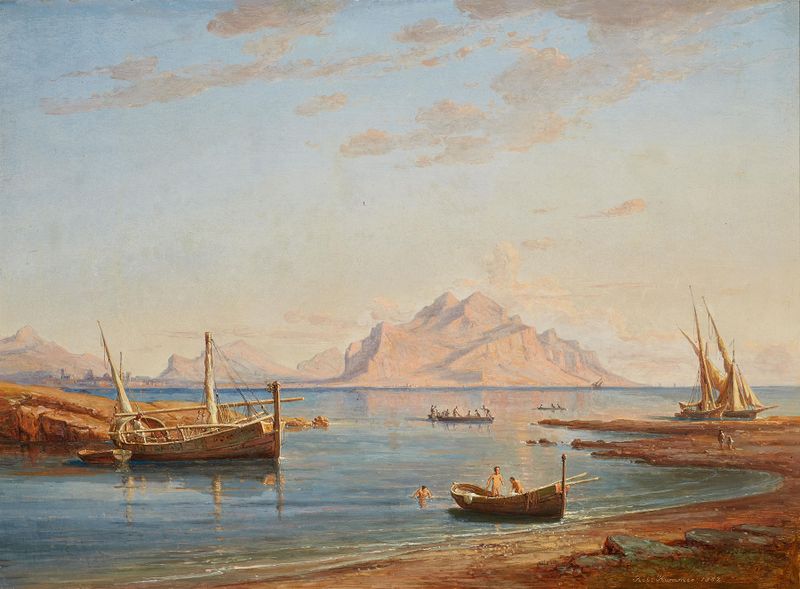
Sizilianische Küstenlandschaft mit Blick auf den Monte Pellegrino
Robert Kummer

Wide landscape (Scotland)
Robert Kummer





