
Die Blaue Grotte auf Capri — History & Facts
What secret hides in the quiet of the canvas? The stillness of Die Blaue Grotte auf Capri beckons, concealing a world of tumult beneath its serene surface. Look to the left at the azure waters, where an ethereal light glimmers, casting reflections that dance against the rocky walls of the grotto. The vibrant blues and greens pull you in, while the textures of the stone elicit a sense of both mystery and danger. Notice how the artist employs delicate brush strokes to create a sense of movement in the water, juxtaposing the calm surface with the chaotic energy lurking beneath.
The composition draws the viewer's gaze inward, inviting contemplation of the hidden depths and stories lying unspoken. Deeper insights reveal a tension between beauty and violence. The grotto, while visually stunning, also hints at the tumultuous forces of nature—waves crashing against rocks, the passage of time, and the hidden perils beneath the tranquil façade. Each ripple in the water suggests an underlying narrative, while the stark contrast of light and shadow evokes a sense of foreboding, challenging us to confront the chaos that can disrupt seemingly perfect moments. In 1870, Robert Kummer created this work during a period of great change within the art world, as artists shifted from Romanticism to embrace the emerging Impressionist style.
Living in Germany and inspired by his travels to Italy, Kummer sought to encapsulate the beauty of the Mediterranean landscape while simultaneously hinting at the turbulent emotions that it may evoke. This duality reflects both his personal journey and the broader cultural shifts of his time.
More Artworks by Robert Kummer
Browse all →
Alte Mühle im Thale bei Berchtesgaden
Robert Kummer

Blick vom Schafberg auf den Dachstein
Robert Kummer

Coast of Portugal
Robert Kummer

Amselgrund,
Robert Kummer

Partie aus dem Plauenschen Grund
Robert Kummer

Schottische Landschaft mit Fischer am Ufer
Robert Kummer
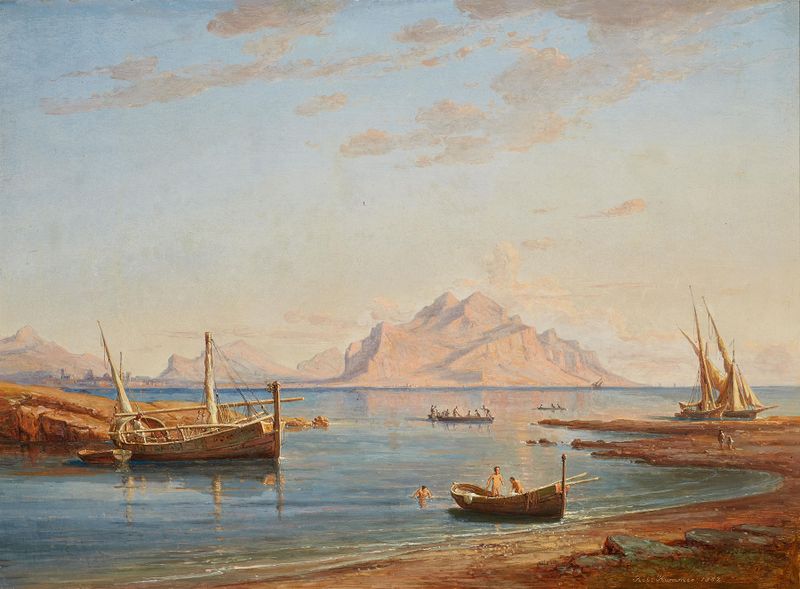
Sizilianische Küstenlandschaft mit Blick auf den Monte Pellegrino
Robert Kummer

Wide landscape (Scotland)
Robert Kummer





