
Amsterdam — History & Facts
In the interplay of light and shadow, balance emerges as a silent protagonist, whispering truths that the eye must seek out. Look to the center of the composition, where the calm waters of a canal reflect the delicate architecture of Amsterdam. Notice how the buildings, with their slender gables and muted hues, stand like sentinels, holding the weight of both history and modernity. The subtle use of color—soft pastels intertwined with earthy tones—creates an inviting ambience, while gentle brushstrokes lend a sense of harmony to the scene, as if time itself has paused to admire its own reflection. As you explore the edges, consider the tension between nature and the urban landscape, where verdant trees frame the architecture, cultivating a dialogue between life and structure.
The stillness of the water serves as a mirror, conveying a sense of introspection amid the bustling city. This balance invites contemplation, hinting at the stories whispered in the silence between the buildings, reflecting the lives that unfold within their walls. During the period when Amsterdam was created, Johannes Franciscus Spohler was part of a burgeoning artistic scene that sought to capture the essence of everyday life in the Dutch city. Although the exact date of this work remains unknown, it reflects a time of cultural growth and exploration within the Netherlands, as artists turned to the beauty of their surroundings to convey deeper themes of balance and tranquility amidst urbanity.
More Artworks by Johannes Franciscus Spohler
Browse all →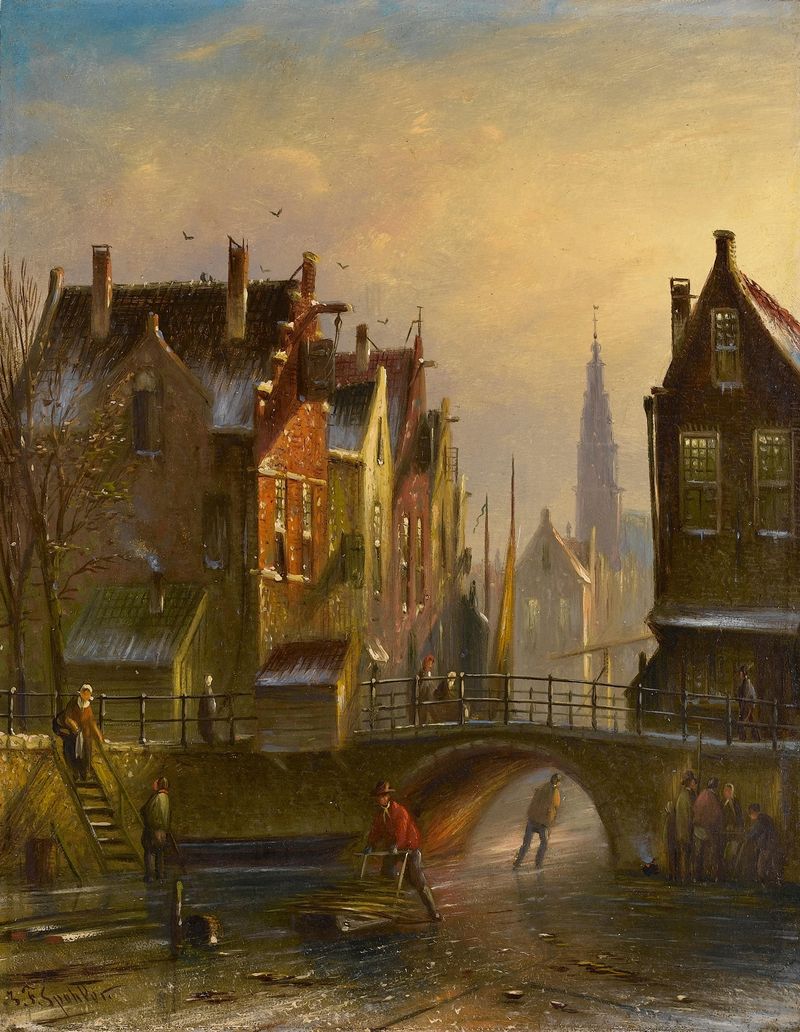

More Architecture Art
Browse all →
The statue of Liberty
Frédéric Auguste Bartholdi

View of Houses in Delft, Known as ‘The Little Street’
Johannes Vermeer

View of Houses in Delft, Known as ‘The Little Street’
Johannes Vermeer

The Cathedral in Rouen. The portal, Grey Weather
Claude Monet

The yellow house
Vincent van Gogh

The Church in Auvers-sur-Oise, View from the Chevet
Vincent van Gogh