Amsterdam, Rokin — History & Facts
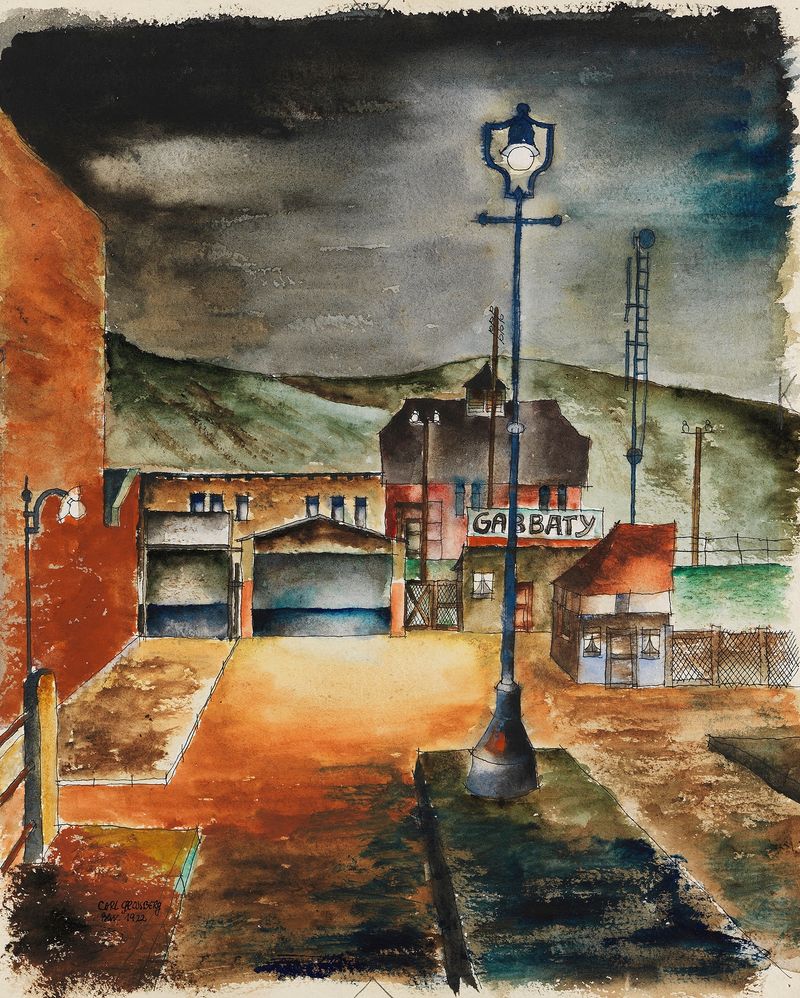
Could beauty survive in a century of chaos? In Amsterdam, Rokin, the answer unfolds like a dream, beckoning the viewer into a vibrant urban tapestry that dances between reality and reverie. Look to the left where the canal softly glimmers, reflecting the golden hues of the buildings that stand proudly along its banks. Notice how Grossberg masterfully plays with light and shadow, using soft pastels to evoke a sense of calm amidst the bustling scene. The composition draws the eye along the water’s edge, inviting a contemplative journey through the city—a living portrait painted with both precision and a gentle touch of impressionism. Beneath the serene façade lies an undercurrent of tension, where the modernity of the architecture meets the timelessness of the water.
The figures, though small in scale, pulse with life and purpose, hinting at stories untold. Observe the juxtaposition of structured forms against the fluidity of the canal; it poses a question about the permanence of beauty in a world perpetually in motion and change. Carl Grossberg created this piece in Amsterdam between 1925 and 1926, during a period marked by post-World War I recovery and the rise of modernism in Europe. As artists sought to capture the spirit of innovation and adaptation, Grossberg’s work reflects both the optimism and the complexities of urban life in a rapidly changing society.
This painting stands as a testament to a city evolving yet grounded in its own historical narrative.