
An Alpine Pasture — History & Facts
Could a single brushstroke hold eternity? In An Alpine Pasture, the artist invites us to explore the vastness of nature, revealing layers of revelation hidden within each stroke. Look to the left at the rich green grass that undulates gently with the breeze, a vibrant contrast to the soft blues of the distant mountains. Notice how the light dances across the peaks, illuminating the snow-capped summits while casting shadowy depths into the valleys below. The composition balances sweeping curves and sharp lines, creating a rhythmic harmony that draws our gaze through the lush landscape, inviting us to wander into an uncharted pastoral world. Yet, beneath its serene surface lies a profound tension—the harmony of nature juxtaposed against the fragility of existence.
The grazing sheep, mere specks in the grandeur of the scene, symbolize the delicate balance of life that thrives in these untouched regions. Each brushstroke carries not just pigment but also emotion, echoing the artist’s reverence for the natural world while hinting at the impermanence inherent in its beauty. During the period when this piece was created, Edmund Mahlknecht was immersed in the late 19th-century artistic movement, drawing inspiration from the breathtaking Alpine landscapes. The world was rapidly changing, with the advent of industrialization encroaching upon nature.
This tension between progress and preservation permeated his work, urging viewers to appreciate the untouched beauty of the Alpine pastures before it vanished forever.
More Artworks by Edmund Mahlknecht
Browse all →
A View of the Dachstein Massif
Edmund Mahlknecht

Returning Home With An Approaching Storm
Edmund Mahlknecht

Landschaft mit Bergsee
Edmund Mahlknecht

Idylle am Bauernhof
Edmund Mahlknecht

Kühe am Seeufer
Edmund Mahlknecht
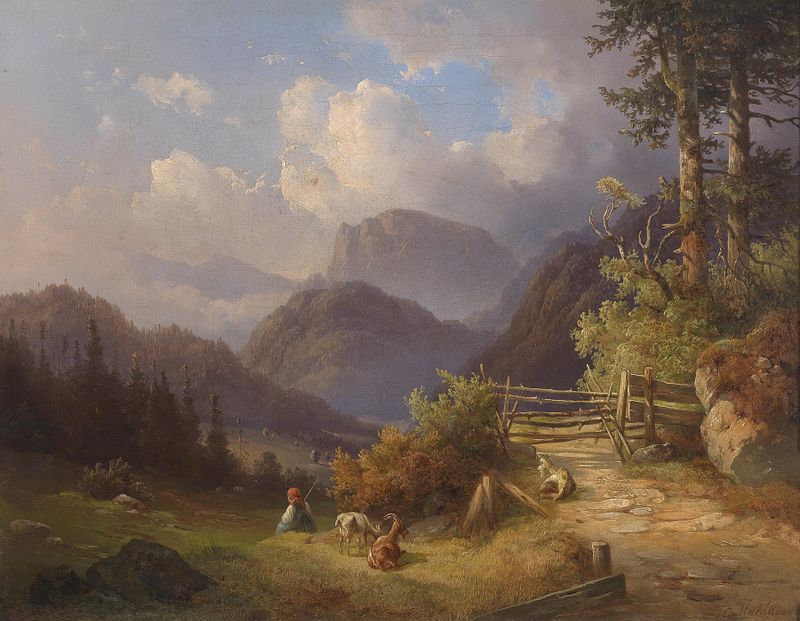
Die junge Ziegenhirtin
Edmund Mahlknecht
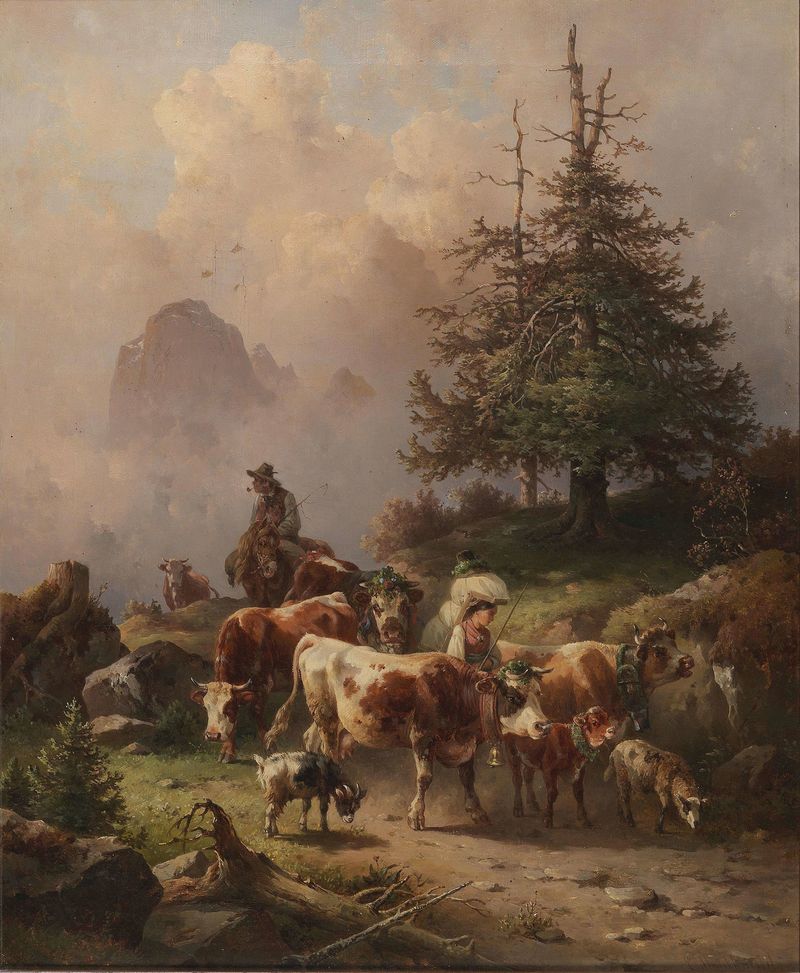
Driving the Cattle down from the Alpine Pastures
Edmund Mahlknecht

Beim Hufschmied
Edmund Mahlknecht
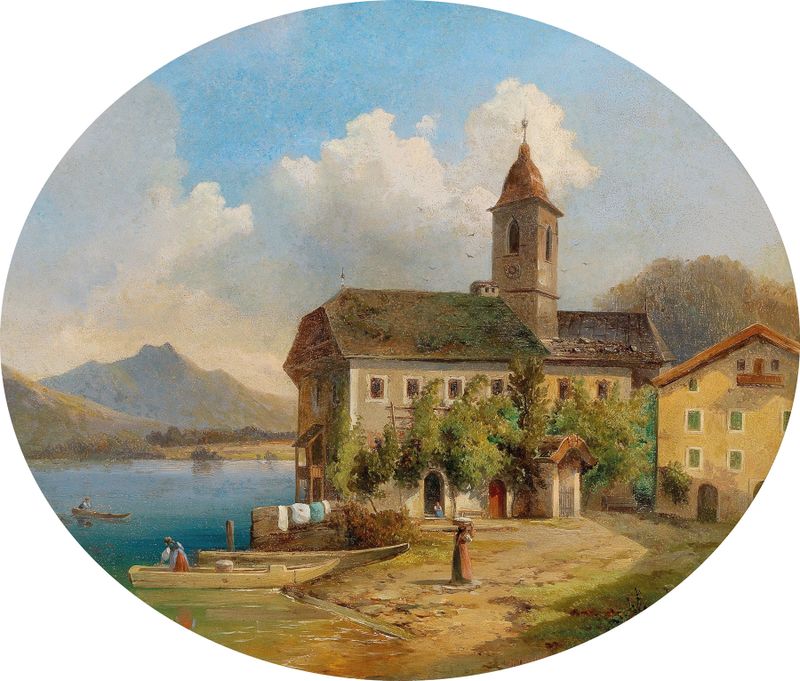
View of St. Wolfgang
Edmund Mahlknecht

Kühe mit Hirten an der Furt
Edmund Mahlknecht





