
An architectural capriccio with elegant figures and a church beyond — History & Facts
In the interplay of architecture and elegance, lies an unsettling truth about decay and renewal. Look to the center of the composition, where delicate figures meander through an idealized courtyard, framed by opulent structures that reach towards an expansive sky. The soft, golden hues of sunlight cascade across elegantly draped garments, enhancing the warmth of the scene. The rich textures of the buildings, however, reveal a delicate dissonance, as signs of age subtly creep into the otherwise pristine designs.
Notice how the meticulously painted surfaces contrast with the subtle hints of erosion, suggesting that even beauty is not immune to the passage of time. The juxtaposition of lively figures against the backdrop of crumbling architecture serves as a poignant reminder of mortality and the inevitable decay that accompanies life. Each elegant pose, while seemingly full of grace, echoes an underlying tension—a fleeting moment captured before the inevitable decay transforms the vibrancy into silence. The church in the background stands as both a symbol of hope and a reminder of the impermanence that defines our existence. Bartholomeus van Bassen likely painted this work in the early 17th century during the height of the Dutch Golden Age, a time when artists were deeply engaged with themes of beauty and transience.
Living in the Netherlands, where urban centers flourished, he was inspired by architectural grandeur and aimed to evoke emotional responses through idyllic settings intertwined with hints of decay. His work reflects a period of cultural prosperity yet remains rooted in the universal truths of life’s ephemeral nature.
More Artworks by Bartholomeus van Bassen
Browse all →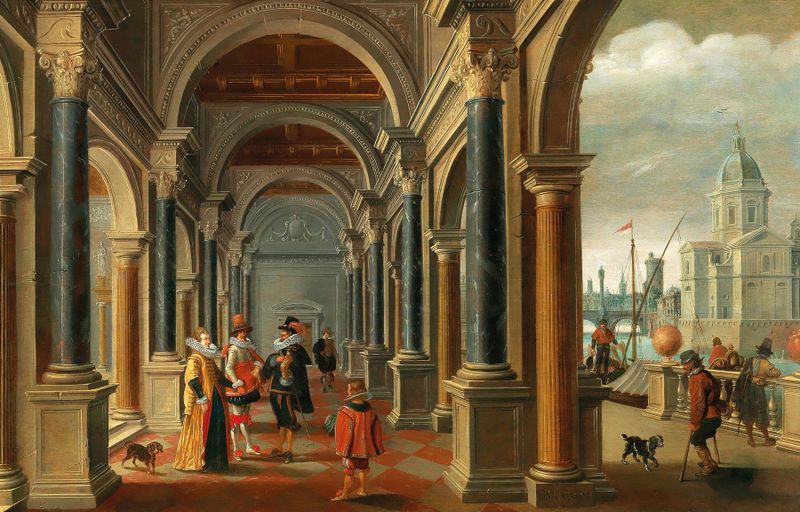
A classical arcade with elegant figures, a city view to the right
Bartholomeus van Bassen
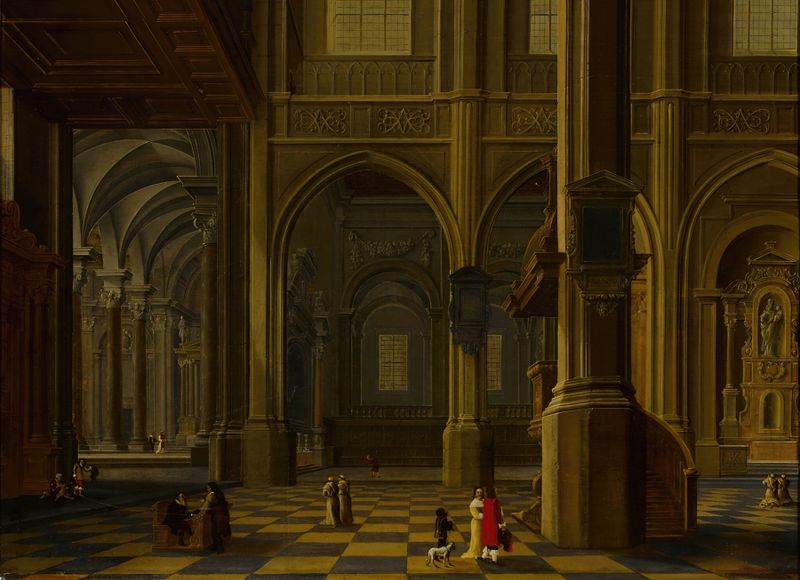
An interior of a Gothic cathedral with figures
Bartholomeus van Bassen
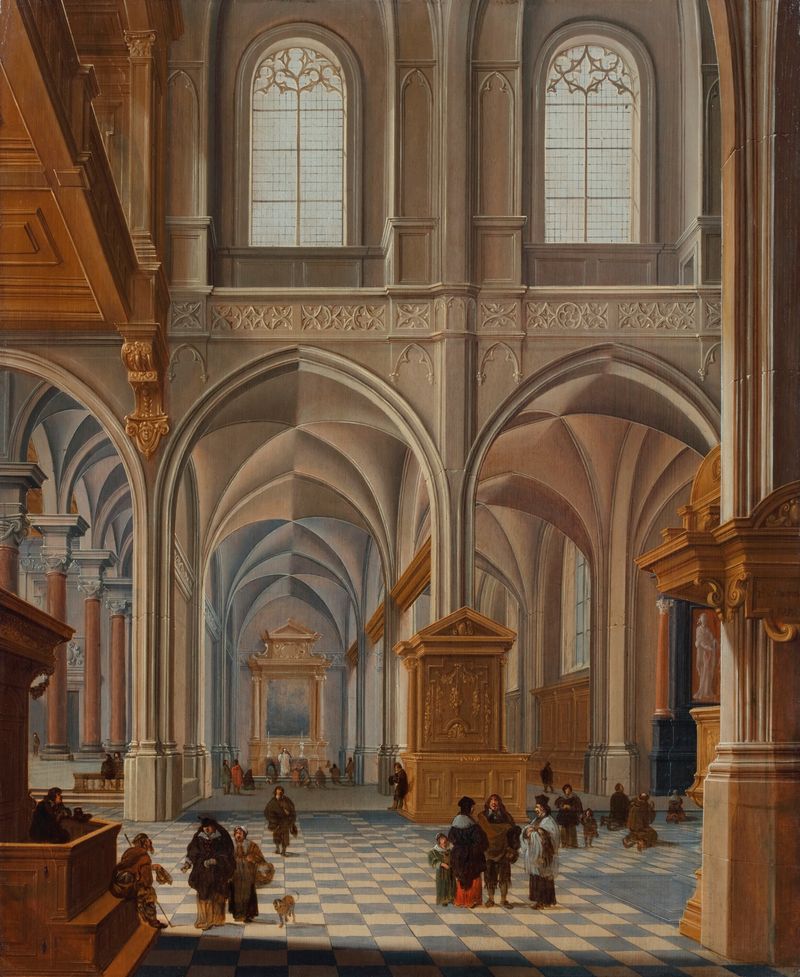
Interior of a church with elegantly dressed figures, friars and a clergyman
Bartholomeus van Bassen
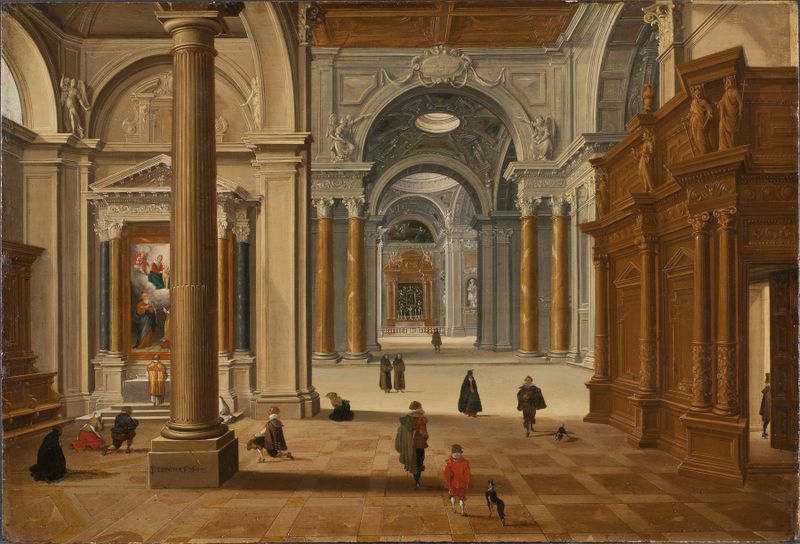
Interior of a Baroque Church
Bartholomeus van Bassen
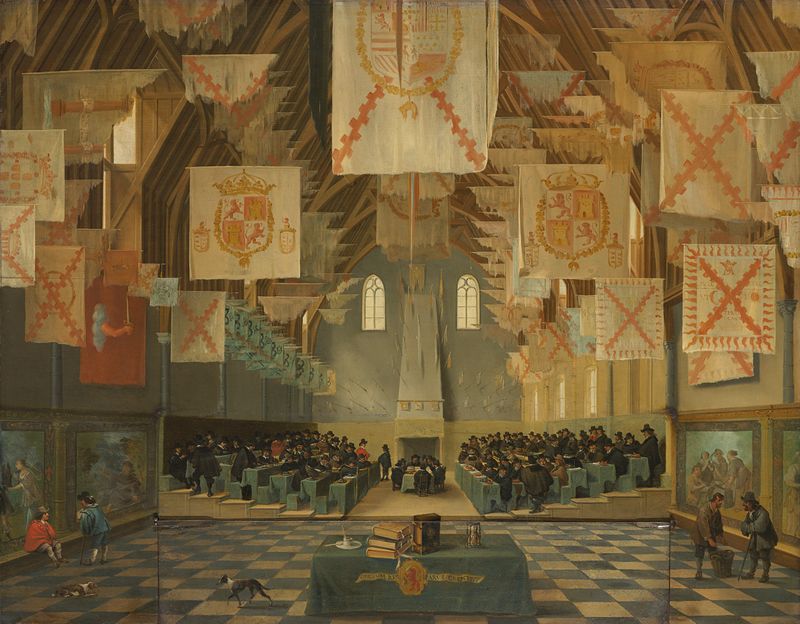
The Great Assembly of 1651
Bartholomeus van Bassen
More Architecture Art
Browse all →
The statue of Liberty
Frédéric Auguste Bartholdi

View of Houses in Delft, Known as ‘The Little Street’
Johannes Vermeer

View of Houses in Delft, Known as ‘The Little Street’
Johannes Vermeer

The Cathedral in Rouen. The portal, Grey Weather
Claude Monet

The yellow house
Vincent van Gogh

The Church in Auvers-sur-Oise, View from the Chevet
Vincent van Gogh