
An Architectural Capriccio With Figures Outside A Palace — History & Facts
Obsession can be a magnificent force, as seen in the layered complexities of art that capture the essence of longing and aspiration. Focus first on the palace, a grand structure that dominates the composition. Its intricate details and stately façade draw the eye, inviting contemplation of its magnificence. Notice how the architectonic precision contrasts with the fluid forms of the figures, creating a visual dialogue between the rigid and the organic.
Soft shadows envelop the scene, hinting at a light that bathes the palace in a golden hue, evoking a sense of nostalgia and dreamlike reverie. Within this interplay lies a deeper narrative. The figures appear caught in a moment of reverie or perhaps deliberation, their gestures hinting at unspoken conversations and unfulfilled desires. The contrast between the solid, unyielding palace and the ephemeral nature of human emotion suggests a tension between aspiration and reality, architecture and humanity.
Each detail — a wistful glance, a gentle pose — invites the viewer to ponder their own obsessions, mirroring the artist’s intricate craft. Ascanio Luciani created this work during a period when the Italian Baroque was flourishing, likely in the late 17th century. Working against a backdrop of vibrant artistic exchange, he was influenced by the rich traditions of Roman architecture and the dynamic movement of figures. This painting reflects his commitment to blending the structural elegance of built environments with the emotive qualities of human presence, encapsulating a moment where both merge in a captivating dialogue.
More Artworks by Ascanio Luciani
Browse all →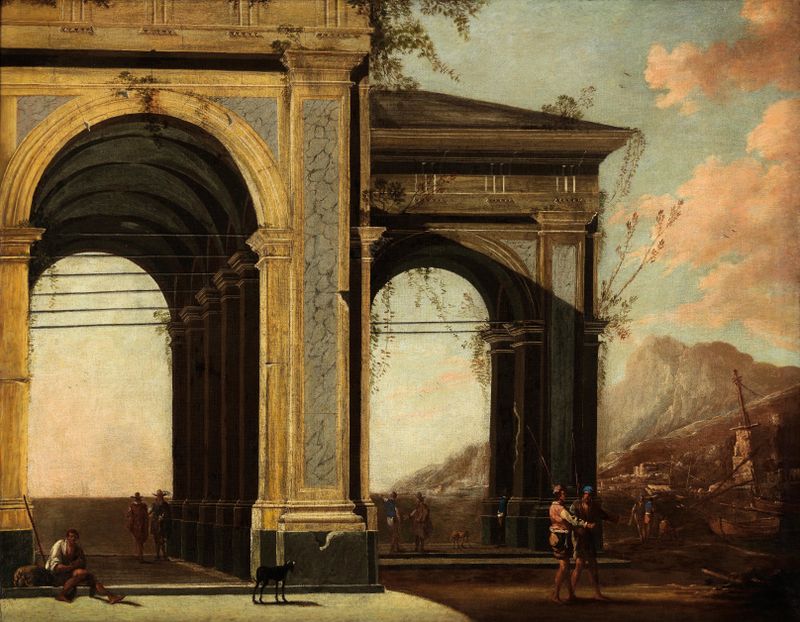
More Architecture Art
Browse all →
The statue of Liberty
Frédéric Auguste Bartholdi

View of Houses in Delft, Known as ‘The Little Street’
Johannes Vermeer

View of Houses in Delft, Known as ‘The Little Street’
Johannes Vermeer

The Cathedral in Rouen. The portal, Grey Weather
Claude Monet

The yellow house
Vincent van Gogh

The Church in Auvers-sur-Oise, View from the Chevet
Vincent van Gogh