Portico With Loggia By The Sea, With Boats And Figures — History & Facts
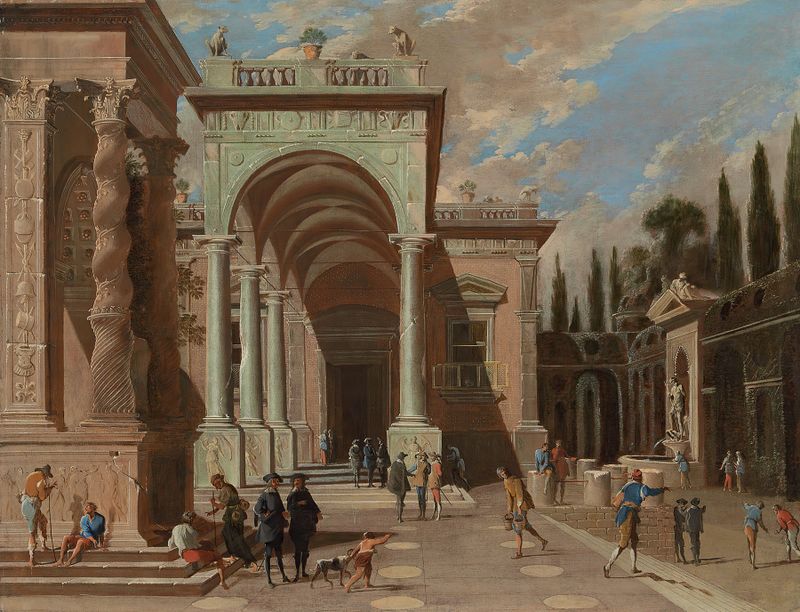
Who listens when art speaks of silence? In the quietude of Portico With Loggia By The Sea, With Boats And Figures, the viewer is drawn into a world where faith dances lightly on the surface of still waters. Look to the left at the rhythmic arrangement of boats, their sails creased by the caress of a gentle breeze. Notice how the warm hues of the setting sun spill over the loggia, creating a tapestry of light and shadow that breathes life into the scene. The figures, positioned with deliberate grace, evoke a sense of community and connection, inviting you to explore the interplay between the architectural elements and the natural landscape.
Each brushstroke reveals the artist’s careful attention to detail, as the texture of the stone contrasts with the fluidity of the sea. Yet beneath this serene façade lies an undercurrent of longing and contemplation. The juxtaposition of the sturdy loggia against the ephemeral beauty of the sea speaks to the human condition — our quest for stability amidst the ever-changing tides of life. The gathering figures, though engaged in silence, convey an unspoken camaraderie, suggesting that faith is often found in the shared moments between individuals. Ascanio Luciani painted this work during a period of artistic exploration, likely in the late 16th century, a time when Italy was rich with the influences of the Renaissance.
These years were marked by a resurgence of interest in classical forms and the natural world, reflecting the artist's own journey as he sought to capture the delicate balance between humanity and nature in a world fraught with transformation.