An der Heerstraße — History & Facts
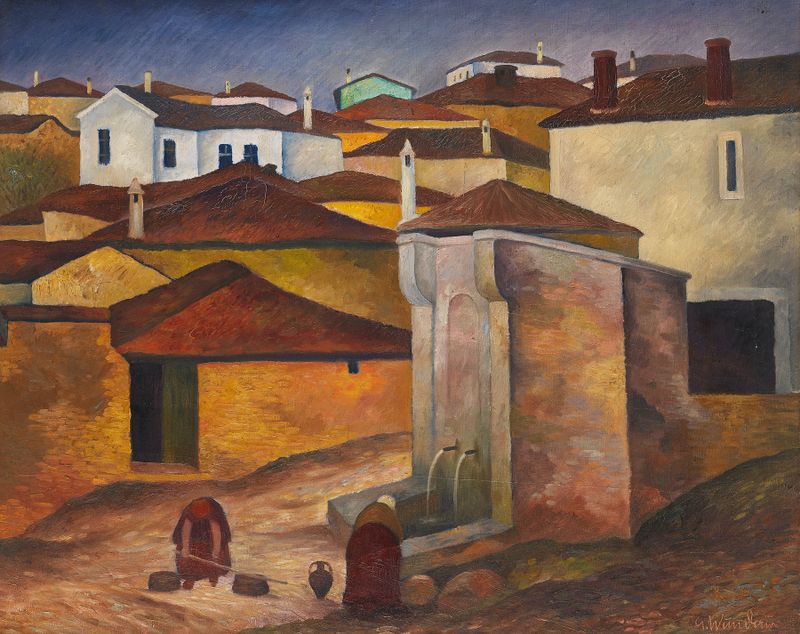
This thought resonates through the serene yet poignant imagery captured in An der Heerstraße, where quiet moments conceal deeper truths. Look to the horizon, where a gentle path winds its way through lush, verdant fields, bathed in a soft, golden light. The brushwork is delicate, infusing the rolling landscape with a sense of tranquility. Notice how the artist employs soft pastels to create a harmonious balance between light and shadow, evoking a feeling of peace amidst the subtle turmoil of the world.
The horizon stretches out, inviting the viewer to wander into the scene, while the faint outlines of trees stand guard, their presence grounding the viewer in the moment. Yet beneath this facade of calm lies an undercurrent of tension. The vibrant colors, although soothing, hint at complexities of life during a tumultuous time in history. Each stroke carries with it a sense of longing, as if the beauty of the landscape is a temporary refuge from the chaos of the outside world.
The distant figures, almost ghost-like, seem lost in their thoughts, navigating through their own struggles while the serene backdrop offers a fleeting sense of solace. Gustav Wunderwald painted An der Heerstraße in 1918, a period marked by the aftermath of World War I. Living in Germany, he faced the tumult of a nation in recovery. Amidst the upheaval, artists began to explore new narratives and emotional landscapes, moving away from traditional forms to capture the essence of human experience.
This work stands as a testament to that shift, reflecting both the serene beauty of nature and the complex emotional tapestry of the times.