
An der Tränke — History & Facts
Did the painter know this moment would outlive them? The stillness of a serene landscape, punctuated only by the soft murmur of water and the presence of gentle creatures, invites us to pause and reflect on time’s passage. Look to the left at the sunlight filtering through the leaves, casting delicate patterns on the ground. The tranquil atmosphere is accentuated by the calm water, where animals gather, their forms mirroring the gentle hues of green and earth. Notice how the artist employs a muted palette, blending browns and greens to evoke a sense of harmony and peace, while splashes of light create focal points that draw the eye throughout the composition. In this work, the contrast between the stillness of nature and the transience of the animals suggests a deeper narrative of life’s cycles.
The figures at the water's edge represent a moment of respite, a pause amidst the bustling world outside the frame, highlighting the beauty found in simplicity. This stillness speaks to a universal longing for connection with the natural world, evoking an emotional resonance that transcends time. Friedrich Voltz painted this piece during a period when Romanticism was flourishing in German art, emphasizing the beauty of nature and rural life. Active in the mid-19th century, Voltz was known for his idyllic landscapes.
The tranquil interaction between man, beast, and nature in this artwork reflects the artist's own admiration for pastoral scenes, capturing a moment that resonates with viewers long after it was created.
More Artworks by Friedrich Voltz
Browse all →
Gewitter im Gebirge
Friedrich Voltz
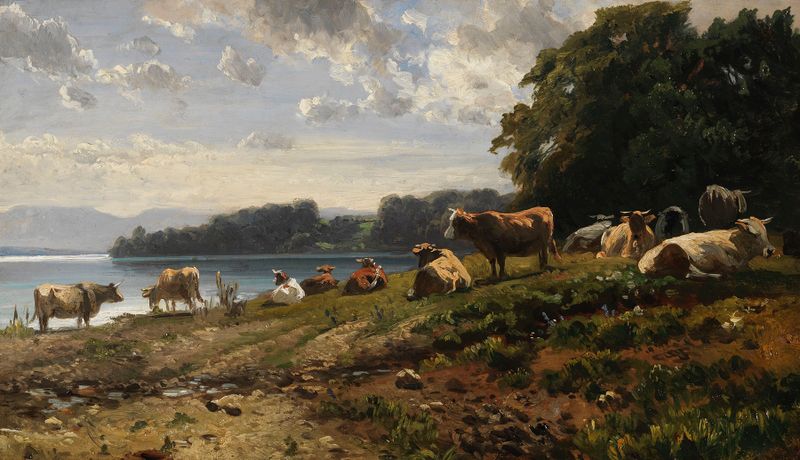
Kühe am Seeufer
Friedrich Voltz
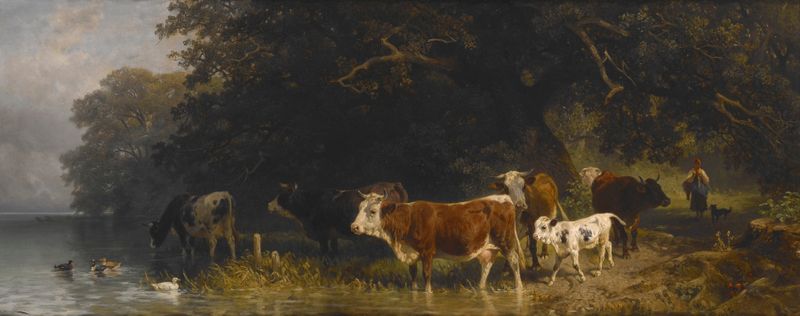
Landscape
Friedrich Voltz
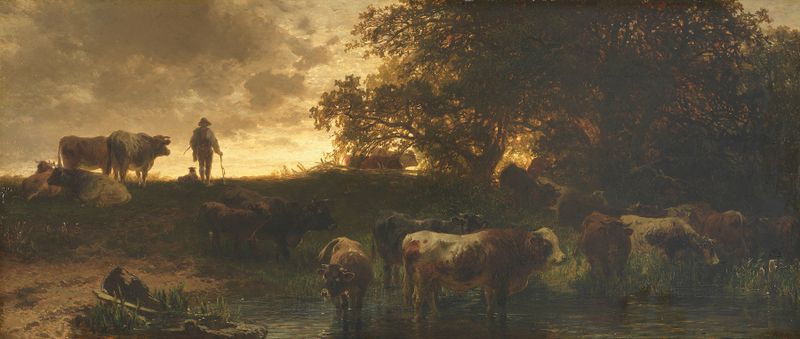
Rinderherde an der Tränke
Friedrich Voltz
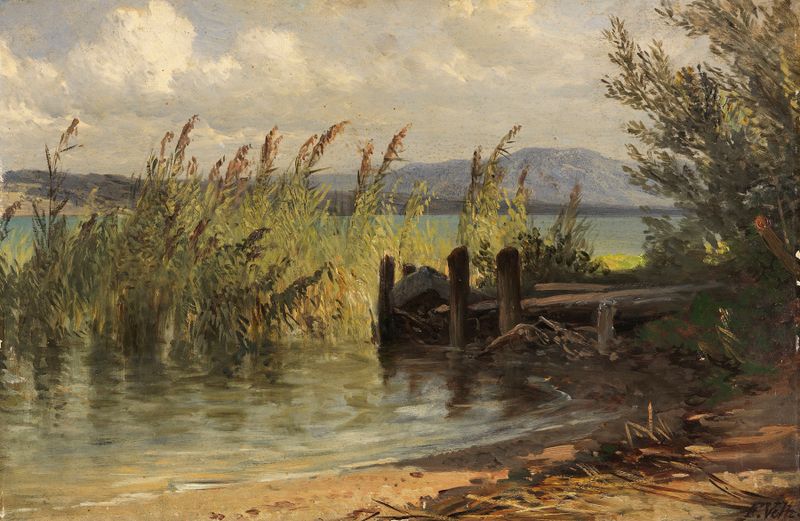
Bootssteg im Schilf
Friedrich Voltz

Returning Home from the Hay Harvest at Sunset
Friedrich Voltz

Shepherd with cattle
Friedrich Voltz
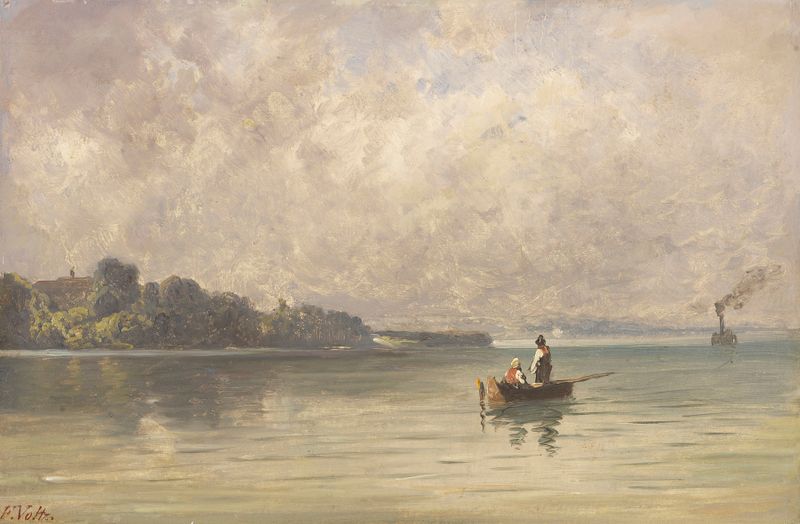
Chiemsee mit Fischerboot und Dampfer
Friedrich Voltz
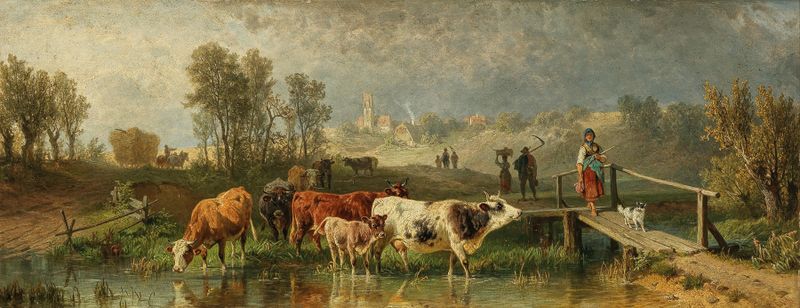
Returning from the Field, in the background a small village
Friedrich Voltz
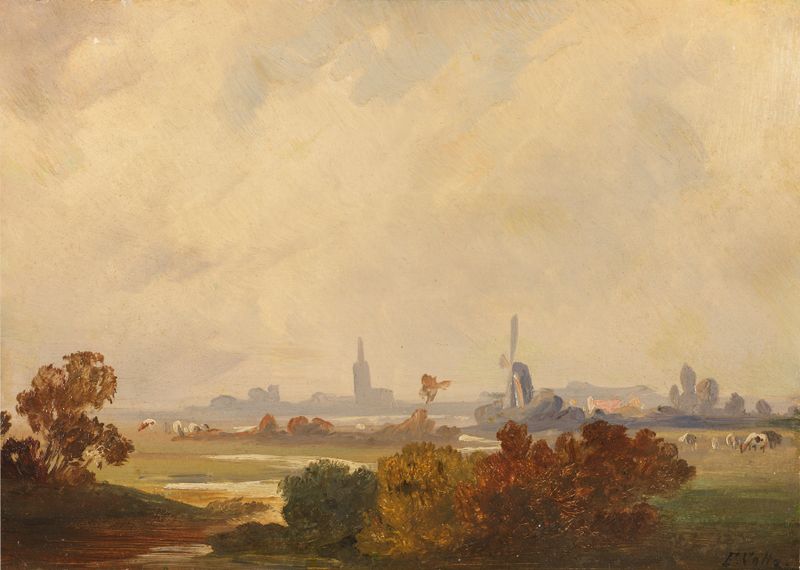
Herbstlandschaft in Holland
Friedrich Voltz





