
Bootssteg im Schilf — History & Facts
In this intimate embrace of memory, the essence of fleeting moments crystallizes, inviting us to linger in the past. Look to the center, where the wooden footbridge stretches gracefully over water, drawing the eye into the rich tapestry of reeds that sway gently in the breeze. Notice how the interplay of soft greens and browns contrasts against the delicate blues and silvers of the water, creating a serene yet poignant atmosphere. The subtle brushstrokes evoke a sense of movement, as if the scene breathes softly, urging the viewer to step onto the bridge and traverse this moment in time. Yet beneath the surface lies a deeper emotional current.
The bridge itself symbolizes a transition—perhaps a passage from youth to maturity, or the reluctance to leave behind forgotten joys. The reeds, with their sturdy yet yielding forms, tell a tale of resilience amidst the passage of seasons, embodying how memories can both anchor and elude us. Each detail, from the ripples in the water to the soft glow of twilight, harmonizes into a poignant reflection of what we hold dear. In the early 1830s, during a period of personal struggle and artistic exploration, Friedrich Voltz found inspiration in the tranquil landscapes of Bavaria.
The era was marked by a growing interest in Romanticism, where nature and emotion intertwined deeply in artistic expression. It was in this context that he painted Bootssteg im Schilf, a work that not only captures the beauty of his surroundings but also resonates with the universal theme of memory's bittersweet embrace.
More Artworks by Friedrich Voltz
Browse all →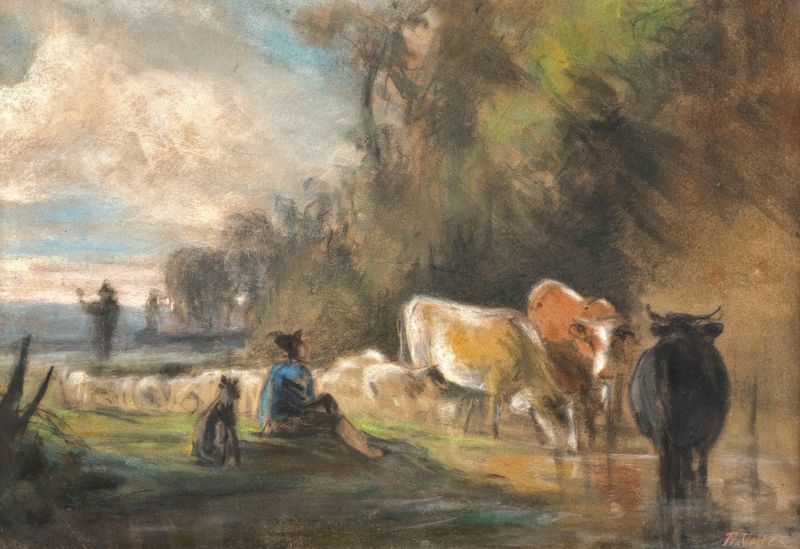
An der Tränke
Friedrich Voltz

Gewitter im Gebirge
Friedrich Voltz
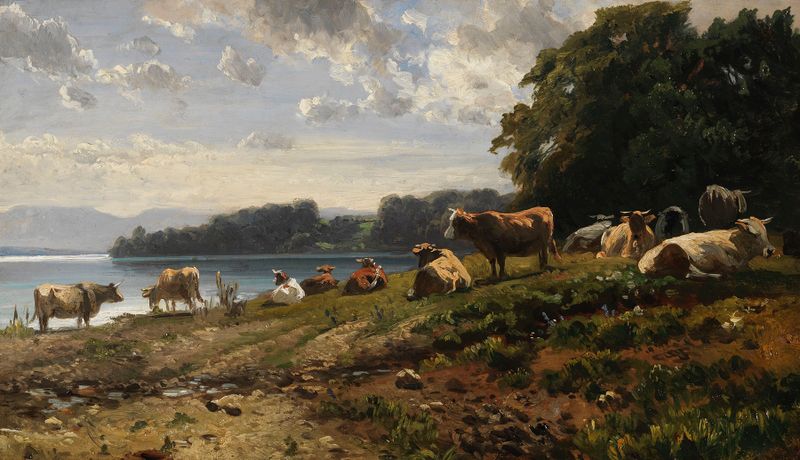
Kühe am Seeufer
Friedrich Voltz
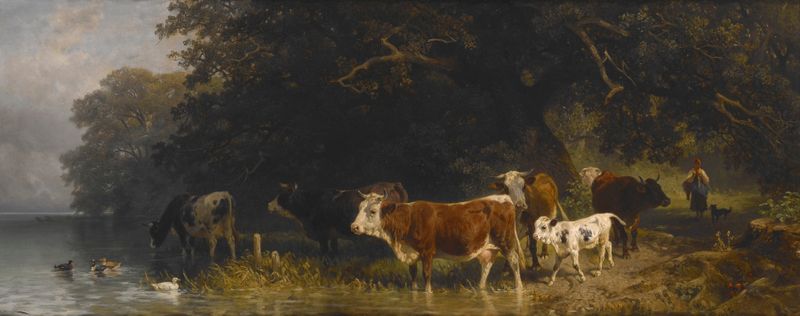
Landscape
Friedrich Voltz
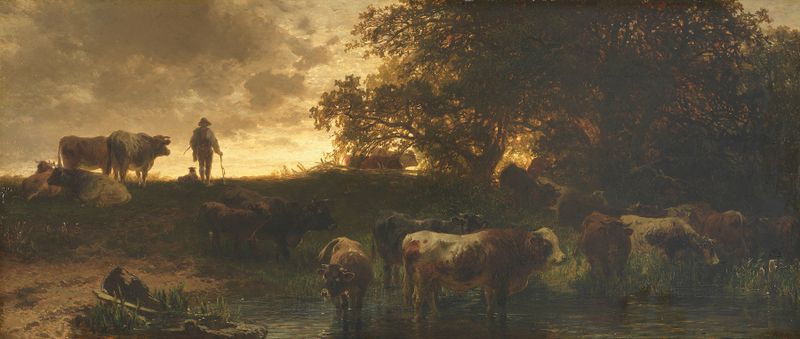
Rinderherde an der Tränke
Friedrich Voltz

Returning Home from the Hay Harvest at Sunset
Friedrich Voltz

Shepherd with cattle
Friedrich Voltz
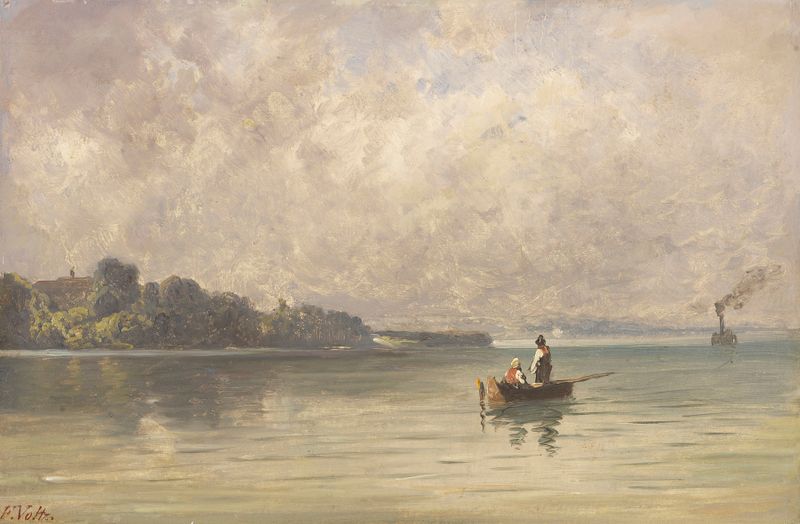
Chiemsee mit Fischerboot und Dampfer
Friedrich Voltz
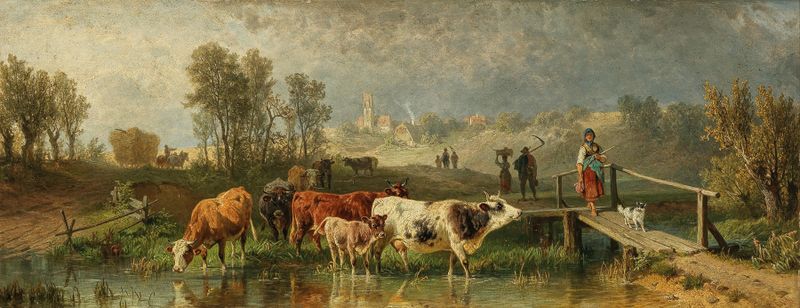
Returning from the Field, in the background a small village
Friedrich Voltz
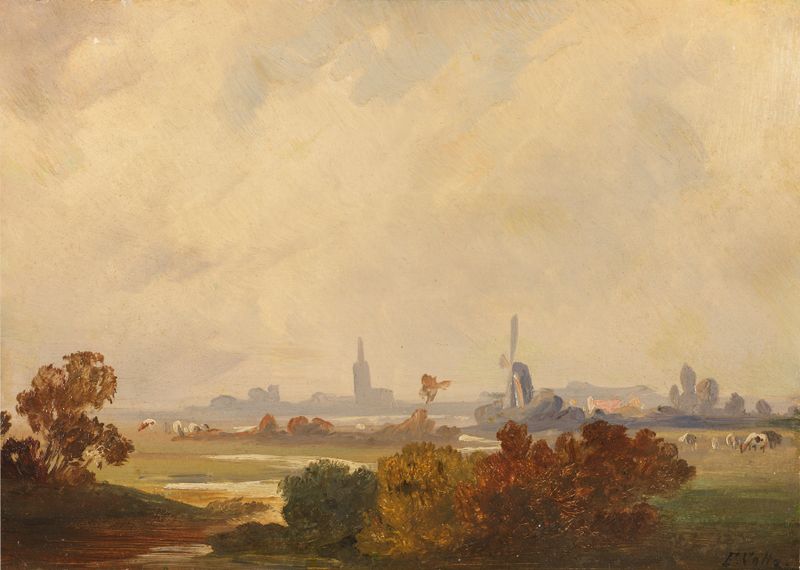
Herbstlandschaft in Holland
Friedrich Voltz





