An English Landscape — History & Facts
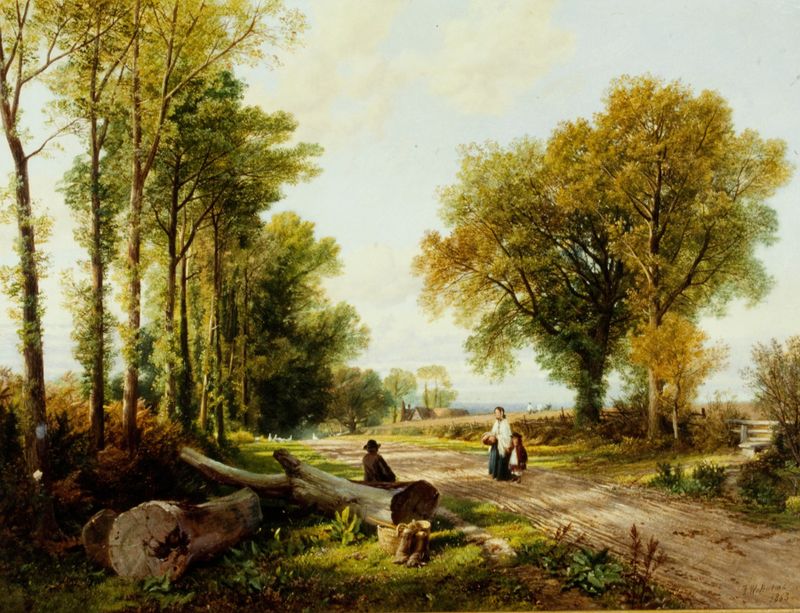
Can paint confess what words never could? In the delicate brushstrokes of an English landscape, a world emerges where silence speaks volumes and nature reveals untold stories. Focus first on the horizon, where rolling hills gently meet the sky, a soft gradient of greens and blues creating a serene backdrop. Notice how the muted sunlight bathes the scene, drawing your eye to the winding path that seems to beckon the viewer into the artwork. The artist's technique is masterful; each blade of grass is rendered with tenderness, while the clouds above swirl with a dynamic energy, hinting at emotions that lie just beneath the surface. Hidden within this tranquil setting are the contrasts of life and stillness, movement and rest.
The path suggests a journey, perhaps symbolizing the passage of time or the choices we make in life. Each element, from the solitary tree to the distant cottage, tells a part of a larger narrative, a quiet reminder that every landscape holds layers of meaning waiting to be uncovered. In 1870, while creating this piece, the artist was immersed in the burgeoning movement of naturalism, reflecting a shift towards capturing the subtleties of the English countryside. Living at a time when industrialization was rapidly transforming landscapes, he sought to celebrate the beauty of nature, creating works that resonated with the yearning for simpler, unspoiled environments.
This period marked his deep engagement with the essence of the land, revealing a profound appreciation for the creation surrounding him.