The Sunday Morning Walk — History & Facts
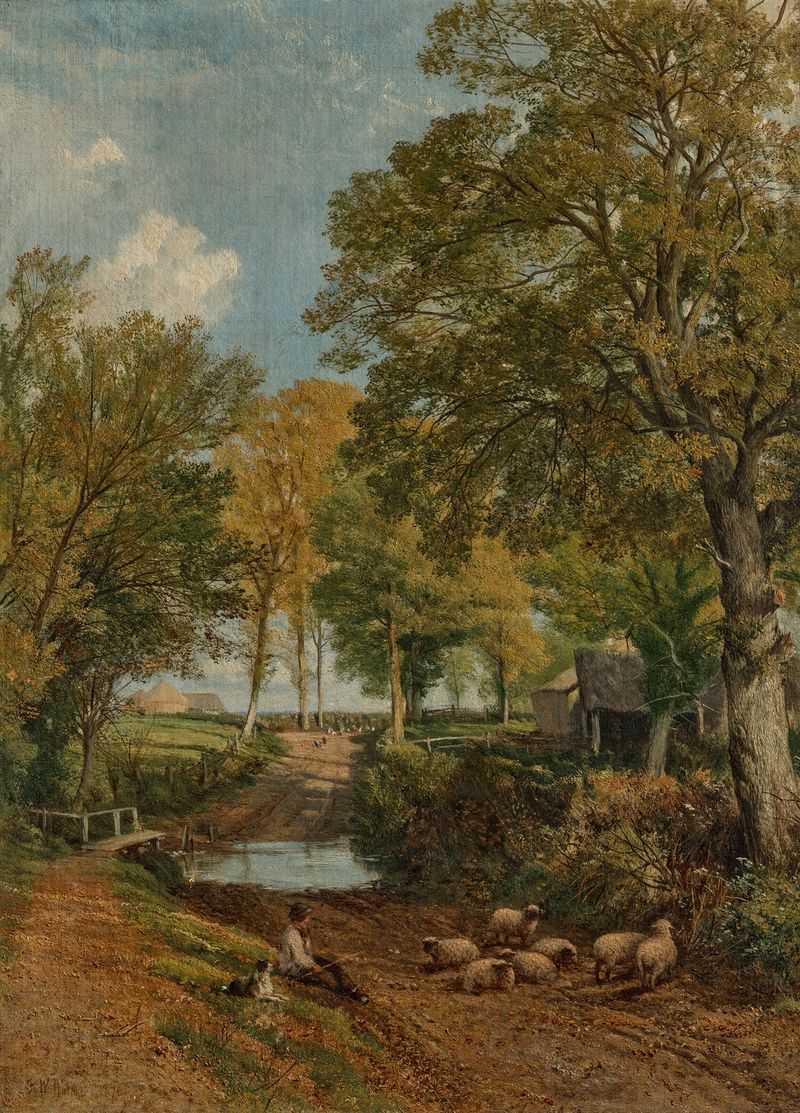
In moments of solitude, our destinies unfold, often illuminated by the quiet beauty that surrounds us. Frederick William Hulme’s work invites us to contemplate every step we take on the path of life, considering what lies ahead and within. Look closely at the figures walking leisurely through the verdant landscape; the couple on the left draws your gaze first. Their silhouettes contrast against the soft, dappled light filtering through the trees, casting a serene glow over the scene.
The gentle curve of the pathway beckons us to follow, suggesting a journey that is both physical and metaphysical. The warm palette of greens and browns evokes a sense of harmony with nature, urging the viewer to breathe in the tranquility. As you delve deeper into the painting, subtle tensions emerge between the figures and their surroundings. The woman’s delicate posture speaks to both grace and vulnerability, while the man’s attentive stance hints at protection and companionship.
Together, they embody a moment suspended in time—an exploration of destiny woven into the fabric of daily life. The fluid brushwork and harmonious colors evoke not just the beauty of the landscape, but also the unspoken connections that exist between people and their environment. Hulme created The Sunday Morning Walk around 1863, a period marked by an evolving art world grappling with realism and impressionism. Working in England during a time of social change, he sought to capture the simplicity and emotional depth of everyday moments.
This artwork reflects his dedication to portraying the human experience amidst the tranquil splendor of the natural world, leaving a lasting impression on viewers.