An Estuary Scene with Fisherman — History & Facts
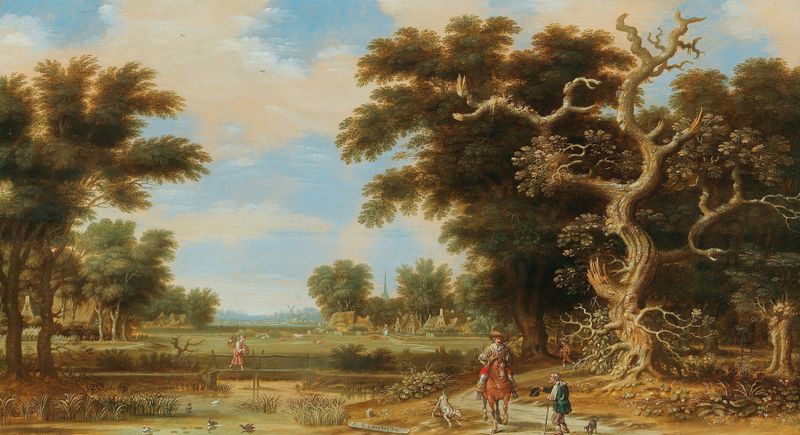
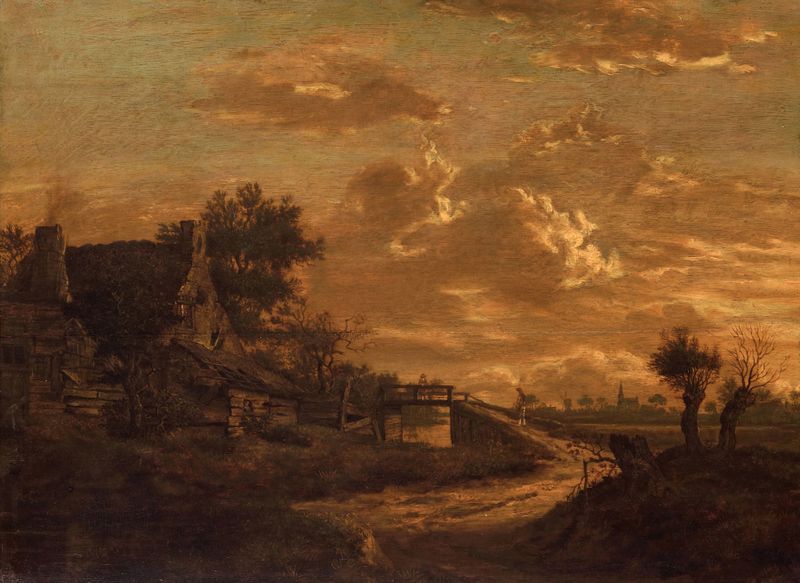
When did color learn to lie? In the delicate interplay of light and shadow, the truth of a moment can be obscured, revealing the hidden betrayals of nature’s beauty. Look to the right at the figure of the fisherman, his silhouette stark against the shimmering surface of the water. Notice how the vivid blues and greens swirl around him, inviting yet deceptive. The artist's brushstrokes masterfully create a sense of movement in the water, while the horizon pulls the eye into a contemplative distance, surrounding the fisherman with a sense of isolation.
The colors are rich but layered, evoking both serenity and an unspoken tension. In this tranquil landscape, the contrast between the vibrant water and the somber figure speaks volumes of internal struggle. The fisherman’s pose, his head slightly bowed, suggests weariness and perhaps resignation, while the lively reflections in the water mock his stillness. This emotional undercurrent resonates, hinting at the fragility of hope against an indifferent natural world.
The ethereal, almost dreamlike quality of the scene belies the harsh reality of life as a fisherman, where the bounty of the sea can be as treacherous as it is generous. Raphael Govertsz. Camphuysen created this work in the second quarter of the 1600s, during a period marked by a shift in artistic styles and societal values. Working in the Netherlands, he found inspiration in the natural landscapes of his homeland, yet the broader art world was grappling with the themes of realism and emotional depth.
This was a time when artists began to embrace the complexity of human experience, capturing not just the beauty of nature but the poignant truths that lay beneath.