An Evening in March — History & Facts
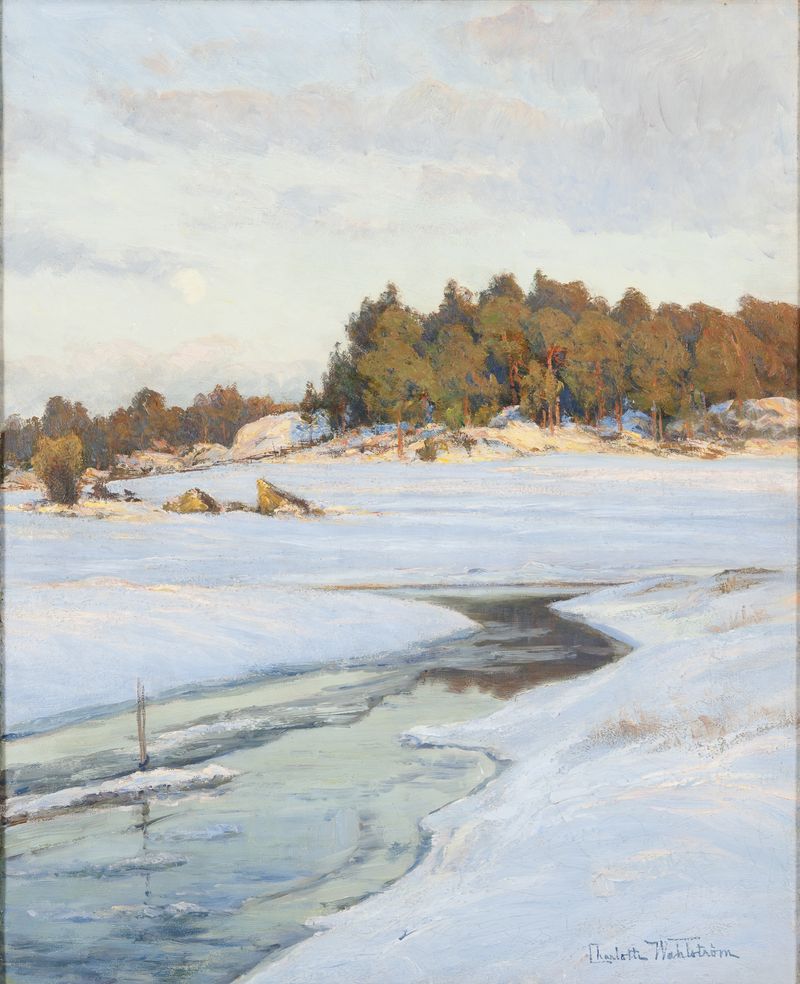
What if beauty was never meant to be finished? In the twilight of a March evening, an air of quiet solitude envelops the canvas, inviting viewers to linger in its contemplative embrace. To begin your exploration, look to the left where a solitary figure stands, draped in muted colors that echo the somber palette of twilight. The delicate brushstrokes create a sense of movement in the fabric of the figure’s clothing, suggesting a gentle breeze. Notice how the light fades into soft hues of violet and amber, illuminating the scene while casting elongated shadows that stretch across the landscape, enhancing the feeling of isolation. Within the painting, the contrast between the vividness of nature and the stillness of the figure speaks volumes.
The blossoming flowers in the foreground whisper of spring's arrival yet stand in stark opposition to the lingering chill of winter. Each brushstroke captures a fleeting moment, conveying a poignant sense of loneliness that resonates deeply with the viewer. The empty space surrounding the figure amplifies their solitude, transforming a simple evening into a profound meditation on the human condition. Created in 1906, An Evening in March reflects Charlotte Wahlström's poignant observations of life and emotion during a time when the art world was shifting towards modernism.
At this juncture, she was deeply influenced by her experiences in Sweden, where the changing seasons often mirrored the emotional landscapes of her subjects. This work stands as a testament to her ability to capture the essence of solitude amidst the beauty of nature.