An Evening in March — History & Facts
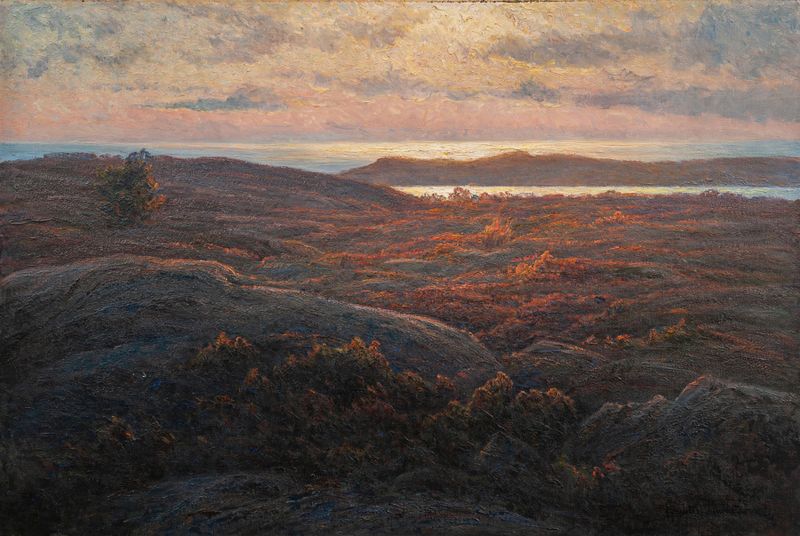
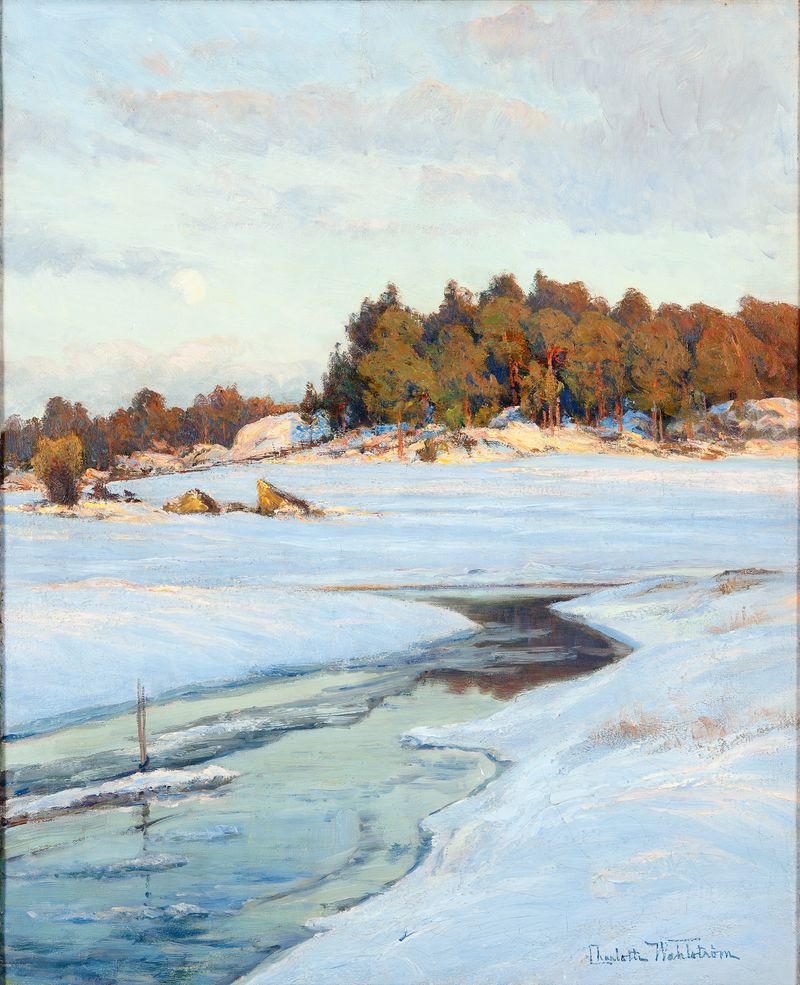
When did color learn to lie? In a world where hues can deceive, the essence of obsession finds its canvas, cloaked in the shadows of twilight. Look to the bottom left where the deep indigo washes over the landscape, evoking both serenity and melancholy. Notice how the crimson and ochre brushstrokes bleed into one another, creating an almost surreal harmony, yet hinting at discord beneath. The composition is centered by a solitary figure, heart-stirringly small against the vastness, both physically and emotionally isolated.
The hazy light of the setting sun casts an ethereal glow, illuminating the tension between the figure and the encroaching darkness. In the distance, a horizon taut with expectation beckons, yet the foreground grips its viewer in a moment of stillness that feels almost haunted. The figure’s posture, bent and contemplative, suggests a profound inner struggle, while the delicate interplay of light and shadow reveals the complexity of longing. Each brushstroke seems to narrate a story of obsession, hinting at an unfulfilled desire that permeates the air—an emotional weight that resonates deeply within the viewer. Created in 1906, this work emerged during a time of great artistic exploration for Charlotte Wahlström, as modernism began to reshape the landscape of art.
Living in Sweden, she was influenced by the Symbolist movement, which sought to express emotional experiences rather than depict reality. This period marked her pursuit of an individual style, reflecting both her personal struggles and the evolving world of art around her—an intimate reflection of the tensions of her time.