An extensive lake landscape at dawn with Orpheus and Eurydice, a castle beyond — History & Facts
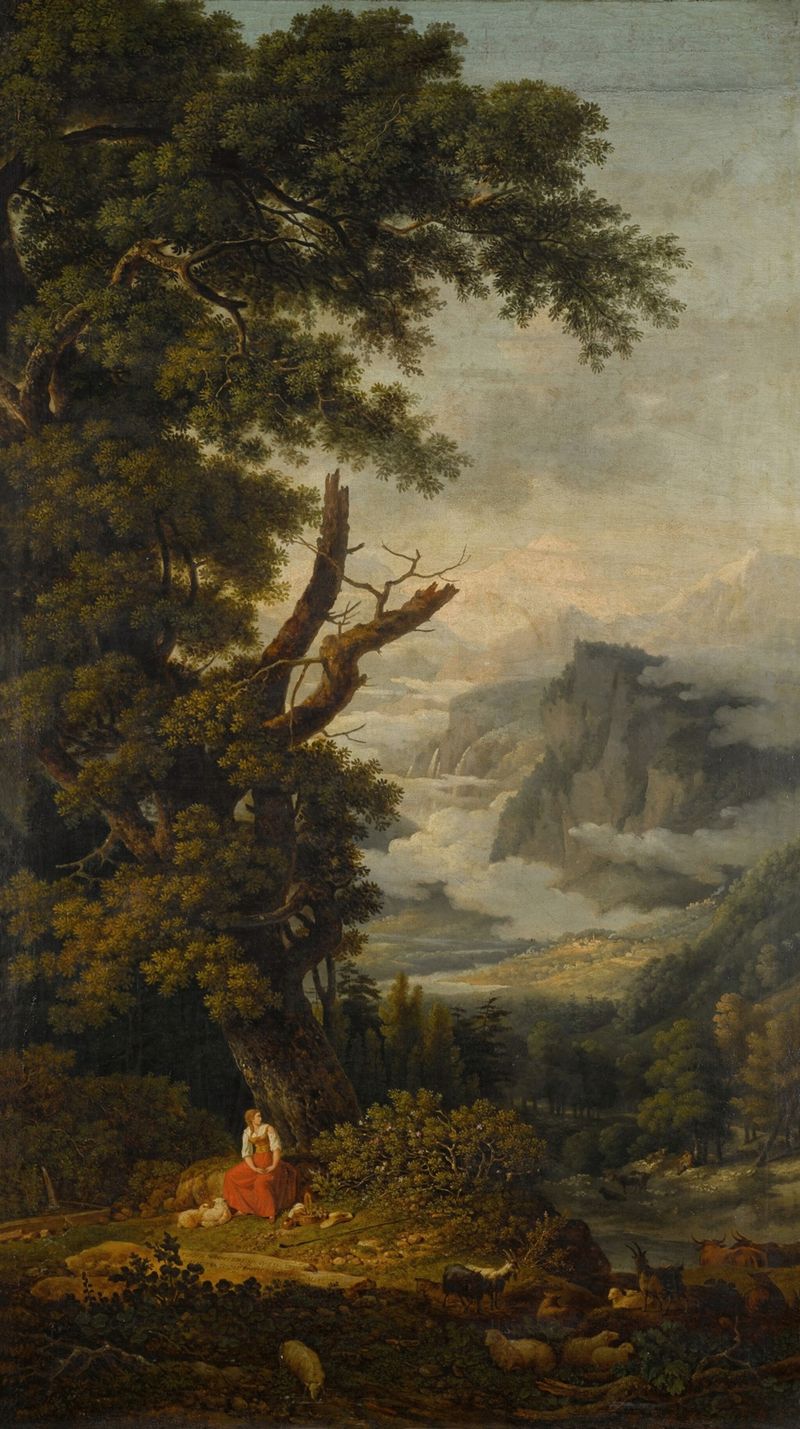
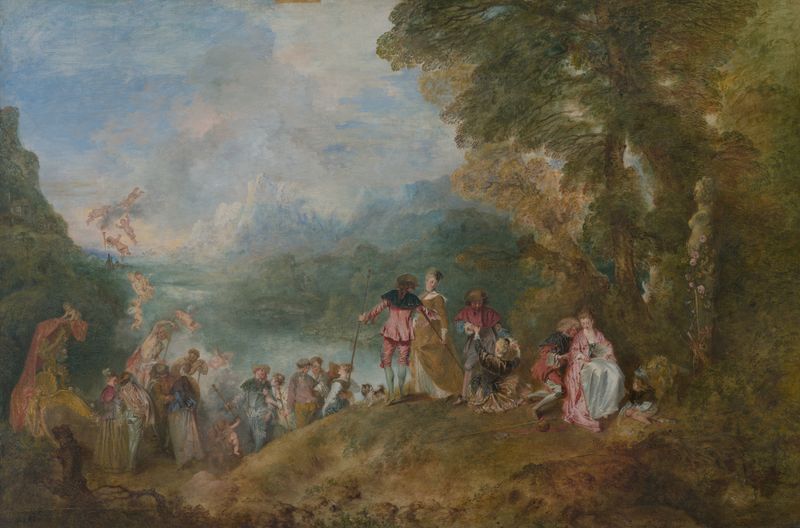
Could a single brushstroke hold eternity? In An extensive lake landscape at dawn with Orpheus and Eurydice, a castle beyond, this question lingers with each glance at the canvas, inviting the viewer to contemplate the infinite narratives painted within. Look to the bottom left, where the shimmering water captures the soft blush of dawn, a perfect mirror reflecting the awakening sky. The gentle strokes of the artist’s brush delineate the figures of Orpheus and Eurydice, their forms delicately entwined amidst the foliage. Notice how the light dances across the lake's surface, illuminating the castle in the distance, its architecture rising majestically against the backdrop of the morning sun, suggesting hope and the promise of new beginnings. Yet beneath the surface lies a profound tension.
The embrace of the lovers teeters on the edge of joy and sorrow, forever caught in the myth of longing. The contrast between the vibrant dawn and the shadows cast by the trees evokes a sense of impending loss, mirroring the duality of love that can inspire both ecstasy and despair. Each brushstroke becomes a whisper of their fate, balancing beauty with an underlying melancholy that resonates deeply with the viewer. In 1802, Jean-Pierre Péquignot crafted this work during a time of artistic transformation in France, where Romanticism began to flourish.
As he painted, he was influenced by the emotional depth characteristic of the movement, responding to a world in turmoil yet rich with poetic potential. This piece stands as a testament to his mastery in capturing the essence of myth and emotion, intertwining personal reflection with the broader cultural shifts of his time.