An Hour of Rest — History & Facts
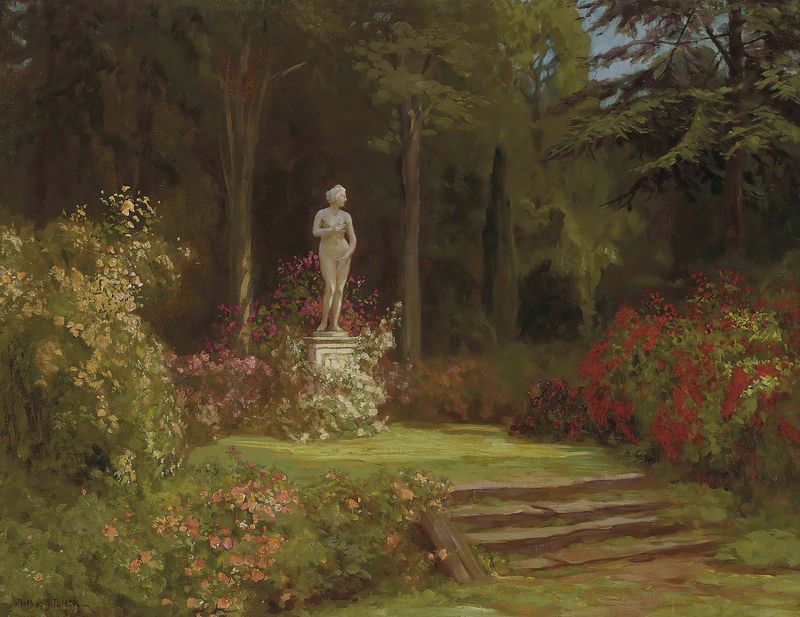
Who listens when art speaks of silence? The stillness captured in An Hour of Rest reverberates through the viewer, inviting contemplation and introspection. Focus first on the gentle interplay of light and shadow that defines the canvas. The soft, diffused illumination casts a warm glow over reclining figures, enveloping them in a tranquil embrace. Notice how the light filters through the trees, creating dappled patterns that dance across the ground, evoking a serene sense of timelessness.
The muted color palette, rich in earthy tones, enhances the feeling of peaceful solitude, encouraging the eye to linger over each subtle detail. Delve deeper into the emotional undertones that resonate within the composition. The relaxed poses of the figures suggest a momentary escape from the demands of daily life, yet their body language hints at a longing for connection or remembrance. The juxtaposition of stillness against the vibrant nature surrounding them speaks to the fleeting nature of time and the importance of taking a pause amid chaos.
Each element, from the slight rustle of leaves to the shadows that lengthen, contributes to the overall meditation on rest and introspection. At the time An Hour of Rest was painted, the artist was exploring themes that connected humanity with nature's serene beauty. Though the exact date of this piece remains uncertain, Arthur John Black was active in the late 19th to early 20th century, when art movements were increasingly focused on emotional resonance and the effects of light. This period saw a burgeoning appreciation for landscape as a reflection of inner states, a notion that deeply influenced Black's work.