The rose garden — History & Facts
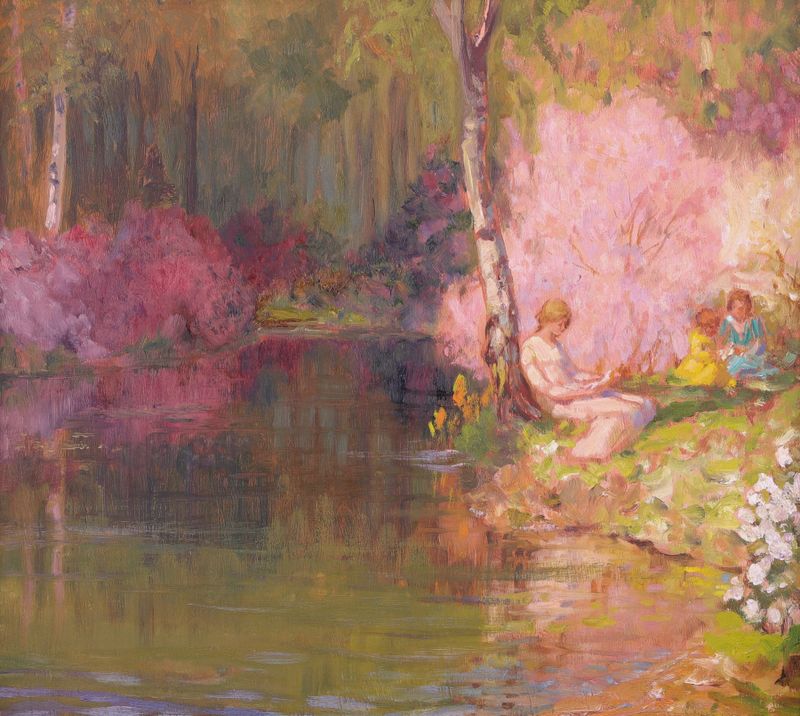
A gentle breeze stirs as sunlight filters through a canopy of blossoms, casting intricate shadows on damp earth. In the center of this vibrant tapestry, a figure, lost in thought, wanders through a sea of color, inhaling the intoxicating fragrance of blooming roses. Their quiet presence suggests a moment suspended in time—a daydream woven into the very fabric of nature. Look to the left at the lush, verdant foliage that cradles the myriad hues of petals.
Notice how the artist has skillfully layered brush strokes to create depth, allowing the roses to cascade in rhythm with the undulating landscape. The palette dances between soft pinks, rich reds, and delicate whites, inviting the viewer’s gaze to meander through the garden as sunlight sparkles like diamonds on dew-kissed petals. Each hue resonates with a sense of tranquility, drawing one into an intimate connection with the scene. Beneath this serene exterior, there lies an exploration of transience and beauty.
The interplay of light and shadow reflects the fleeting nature of dreams and life itself, suggesting both hope and melancholy. The solitary figure symbolizes introspection, perhaps a quest for solace that mirrors the blossoming flowers—a reminder that beauty exists even in stillness. Each rose stands as a testament to moments cherished yet ephemeral, encouraging us to appreciate the present. This piece emerged from the hand of Arthur John Black, whose work flourished during the late 19th to early 20th centuries, a time marked by the growing influence of Impressionism.
Working in England, he sought to capture the poetic essence of nature, often portraying gardens as a sanctuary of reflection. The artist's life was intertwined with themes of beauty and tranquility, making this idyllic scene a fitting representation of his artistic vision.