An Italianate Landscape with Figures by a Tomb — History & Facts
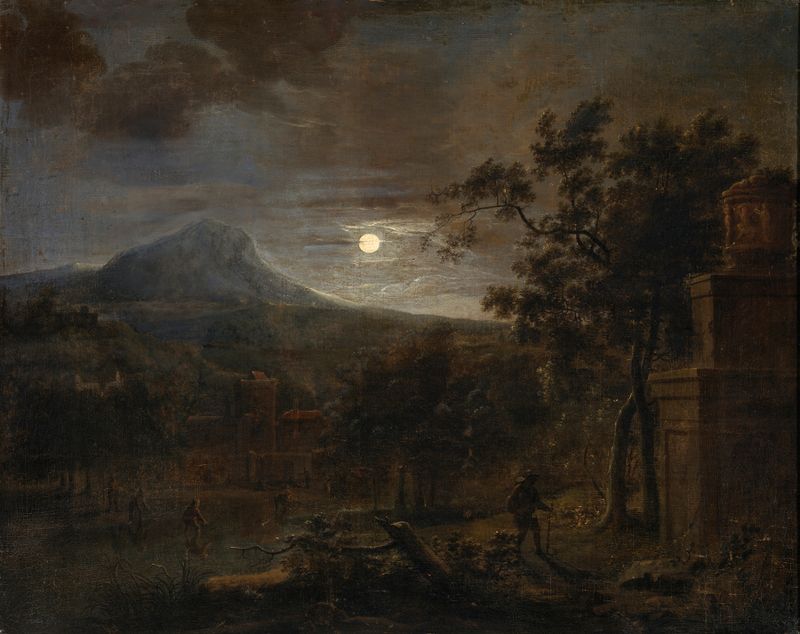
In the interplay of nature’s beauty and the weight of loss, the quietude of grief resonates deeply within the canvas. Look to the left at the gentle curve of the tomb, its somber presence juxtaposed against the vibrant greenery and atmospheric sky. Notice how the light softly caresses the figures, their gestures both reverent and contemplative. The palette, dominated by earthy tones and hints of vibrant foliage, draws the eye toward the figures while simultaneously inviting reflection on their emotional burden. As you explore further, observe the contrast between the serene landscape and the poignant act of remembrance.
The figures, lost in their thoughts, embody a tension between acceptance and sorrow. Their positioning near the tomb enhances the sense of intimacy shared with the space, illustrating that grief can hold beauty, captured in the stillness of the moment. The landscape offers solace, yet the tomb serves as a stark reminder of mortality, creating a dialogue between life and death. In the 1770s, James Forrester was navigating the complex transition from baroque to neoclassical styles within the British art scene.
Living in England, he was influenced by the picturesque ideals of the Italianate landscape, blending them with personal themes of loss and contemplation. During this period, Forrester was developing his unique voice, using nature to explore profound human experiences, ensuring every brushstroke held emotional weight in its simplicity.