
An old quarter of Penzance — History & Facts
What if silence could speak through light? In An Old Quarter of Penzance, a haunting beauty unfurls as decay whispers through weathered walls and forgotten streets. The painting invites us to contemplate the stories held within each crumbling façade, urging us to listen closely to the echoes of a place that time has not quite forsaken. Look to the left at the gentle play of light cascading against the aged stone, revealing textures that speak of history and neglect. Notice how the soft hues of ochre and grey blend seamlessly, creating a melancholic atmosphere that envelops the viewer.
The composition draws the eye along the narrow path, leading us deeper into the scene, as if beckoning us to wander through the remnants of a once-vibrant quarter now overtaken by time’s relentless march. The interplay of shadow and light in Forbes’ work conveys a poignant contrast between vitality and decay. Each element tells a story: the sagging rooflines that lean into one another, the dilapidated windows that seem to watch over an empty street, and the muted colors that reflect an inherent fragility. This artwork is not merely a representation of a location; it is an emotional meditation on loss, solitude, and the passage of time, capturing the essence of what remains when life begins to withdraw. In 1939, a period marked by impending global turmoil, the artist painted this scene in Penzance, a town steeped in maritime history.
During this time, Forbes was immersed in the burgeoning movement of British Impressionism, which focused on capturing the ephemeral quality of light and atmosphere. As Europe teetered on the brink of war, his choice to depict a fading corner of his homeland illustrates a longing for connection amidst the currents of change, anchoring the piece in both personal and historical significance.
More Artworks by Stanhope Alexander Forbes
Browse all →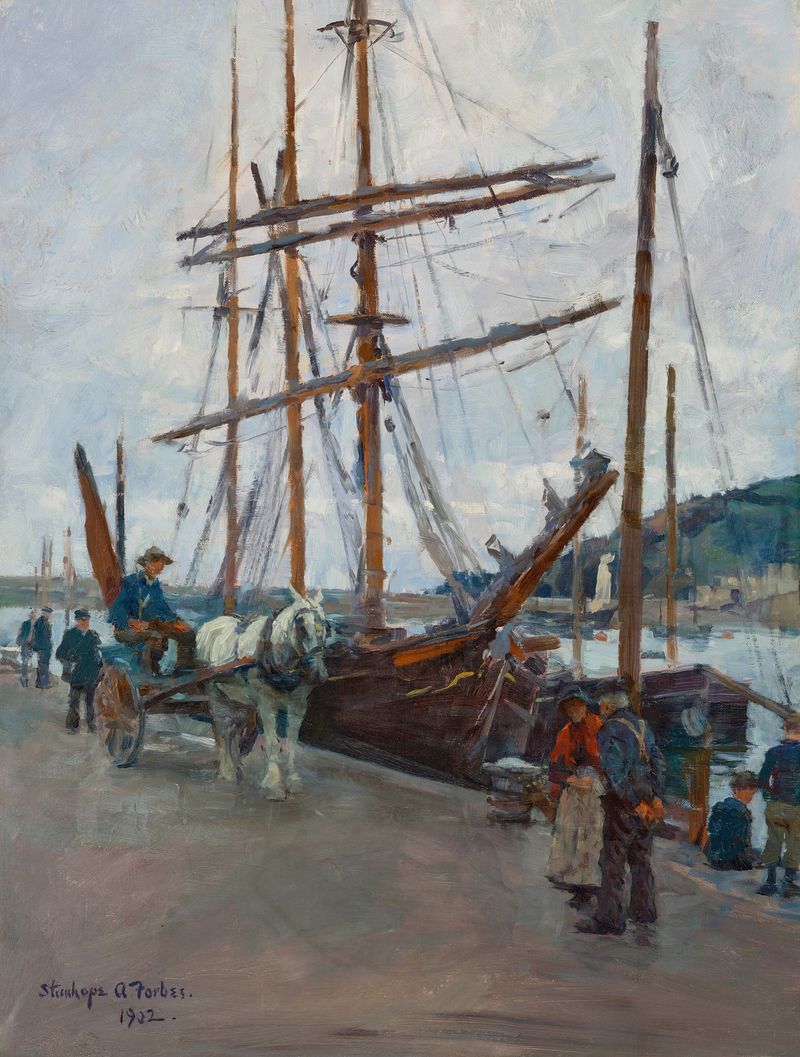
The harbour, Newlyn
Stanhope Alexander Forbes
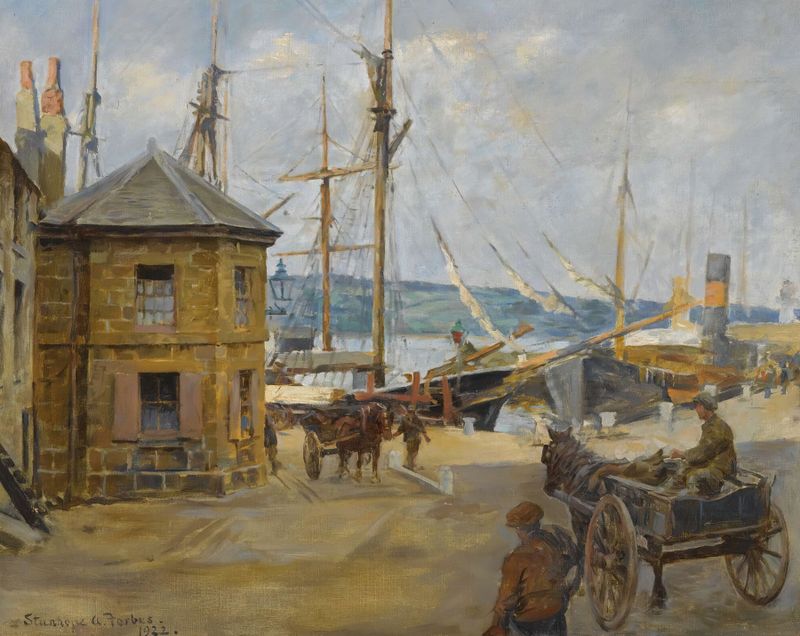
The Old Weighing House, Penzance
Stanhope Alexander Forbes

Coastal scene with fishing boats
Stanhope Alexander Forbes

Penlee Quarry
Stanhope Alexander Forbes

The Terminus, Penzance Station
Stanhope Alexander Forbes
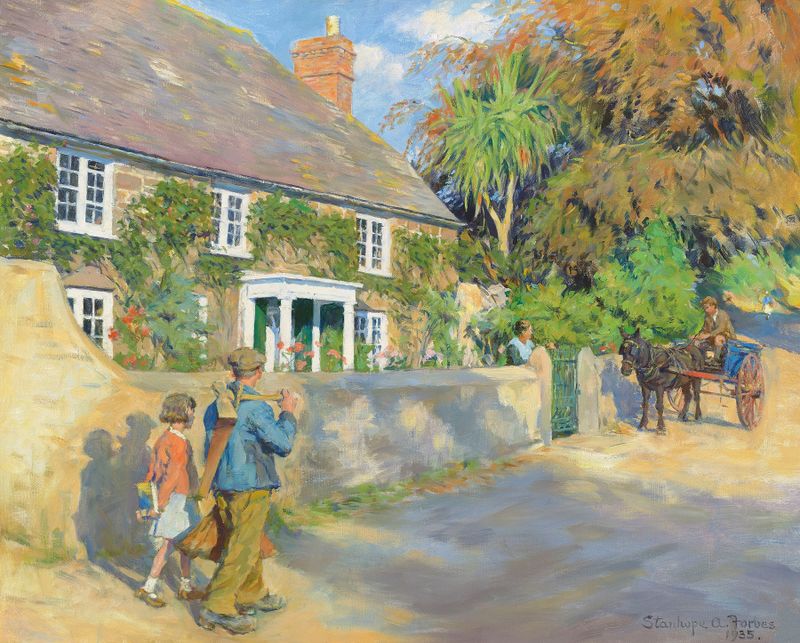
An old Cornish manor
Stanhope Alexander Forbes

The village stream
Stanhope Alexander Forbes

John Tucker Murray (1876-1956)
Stanhope Alexander Forbes

An old Cornish manor
Stanhope Alexander Forbes

The white gate
Stanhope Alexander Forbes





