
The white gate — History & Facts
In the quiet solitude of The White Gate, balance finds its voice amidst the chaos of life. Focus on the gentle interplay of light and shadow as it caresses the white gate, which stands as a striking emblem of threshold and transition. The artist's careful brushstrokes create a soft texture, while the muted palette evokes a sense of tranquility. Notice how the verdant foliage encroaches, almost reverently, around the gate, suggesting the dual nature of the entrance: a barrier yet an invitation. Hidden within this serene moment lies the tension of choices—between the familiar and the unknown, openness and closure.
The delicate balance of nature and architecture speaks to the interdependence of humanity and the environment. Each element, from the gracefully arching trees to the strong, white gate, reflects the innate harmony that Forbes sought to embody, urging the viewer to find equilibrium in their own life. In 1937, Forbes painted this work during a time when he was immersed in a revival of traditional painting techniques, focusing on capturing the essence of the natural world. Living in England, he was influenced by the picturesque landscapes that surrounded him, drawing inspiration from both his surroundings and the artistic community.
This period marked a significant transition in art, as many sought to reconnect with the simplicity and beauty of their environment amidst a rapidly changing world.
More Artworks by Stanhope Alexander Forbes
Browse all →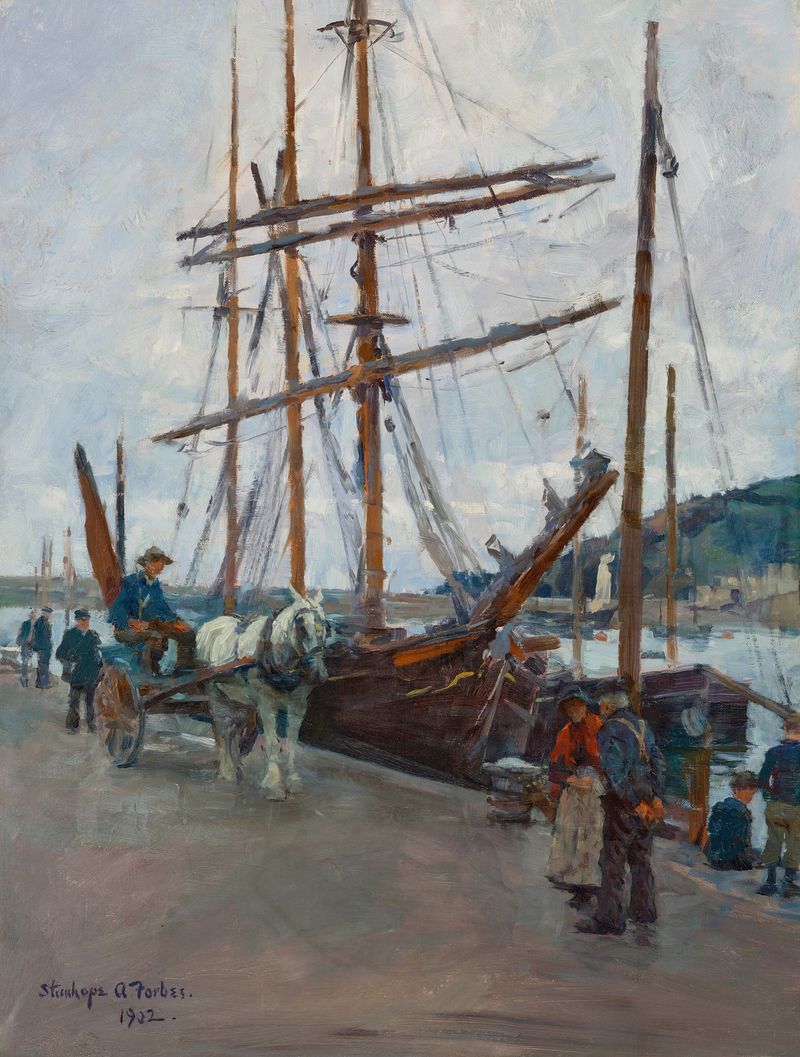
The harbour, Newlyn
Stanhope Alexander Forbes
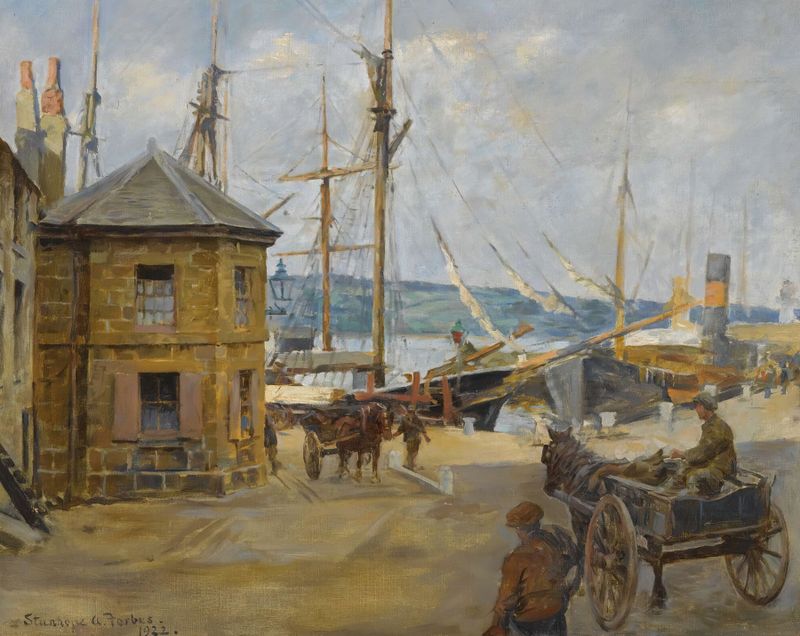
The Old Weighing House, Penzance
Stanhope Alexander Forbes

Coastal scene with fishing boats
Stanhope Alexander Forbes

Penlee Quarry
Stanhope Alexander Forbes

The Terminus, Penzance Station
Stanhope Alexander Forbes

An old quarter of Penzance
Stanhope Alexander Forbes
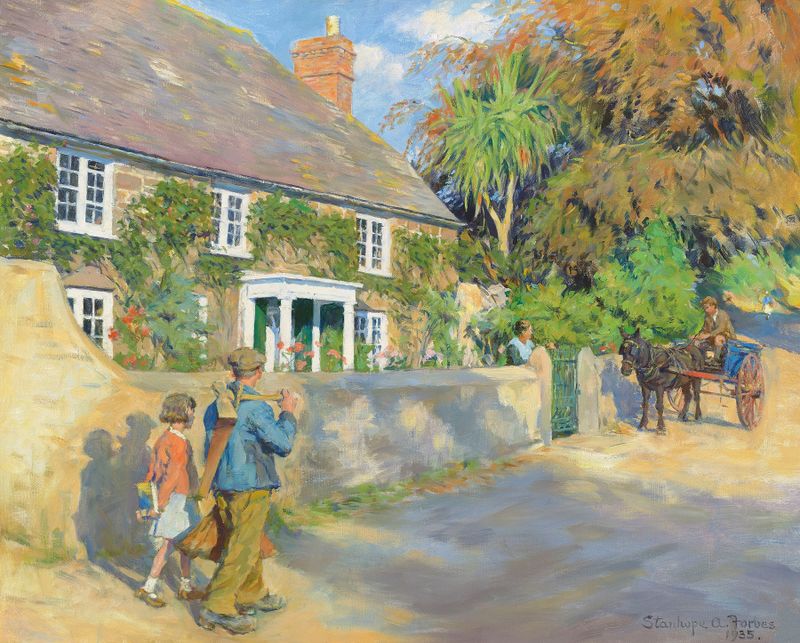
An old Cornish manor
Stanhope Alexander Forbes

The village stream
Stanhope Alexander Forbes

John Tucker Murray (1876-1956)
Stanhope Alexander Forbes

An old Cornish manor
Stanhope Alexander Forbes





