
Ancient beacon of the Mediterranean; The Pharos of Alexandria — History & Facts
Can beauty exist without sorrow? As the Pharos stands tall against the azure sky, its regal form whispers of glory and loss, a silent testament to time's relentless march. Look to the luminous glow of the lighthouse rising heroically above the azure waters. The artist skillfully employs a palette of soft whites and warm yellows, creating an ethereal quality that contrasts with the deep blues of the sea. Observe the intricate details of the stones, each one meticulously rendered to evoke both strength and fragility, reflecting the enduring yet transient nature of monumental structures.
The light radiates from the lantern at the top, a beacon inviting sailors home while simultaneously hinting at their vulnerability to the vast, unforgiving sea below. Beneath its majestic exterior lies a profound tension: the Pharos, a symbol of guidance, stands as a reminder of mortality. The grandeur of the lighthouse juxtaposes the waves crashing mercilessly against its base, accentuating the fragility of human constructs against nature's forces. This interplay embodies the dichotomy of existence—how beauty often arises from the shadows of impermanence, urging the viewer to confront their own fleeting moments. In 1924, Harold Oakley painted this work during a period of introspection and cultural flourishing, reflecting a time when artists sought to explore the deeper meanings of civilization and its history.
Situated in a post-World War I world, Oakley grappled with themes of loss and resurrection, firmly planting his canvas in the rich soil of historical reflection while capturing the spirit of a civilization that once thrived along the Mediterranean.
More Artworks by Harold Oakley
Browse all →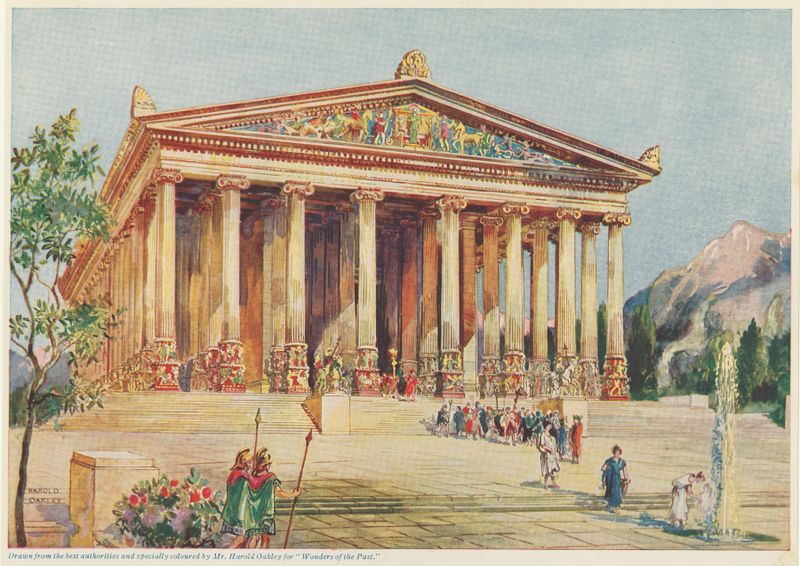
More Architecture Art
Browse all →
The statue of Liberty
Frédéric Auguste Bartholdi

View of Houses in Delft, Known as ‘The Little Street’
Johannes Vermeer

View of Houses in Delft, Known as ‘The Little Street’
Johannes Vermeer

The Cathedral in Rouen. The portal, Grey Weather
Claude Monet

The yellow house
Vincent van Gogh

The Church in Auvers-sur-Oise, View from the Chevet
Vincent van Gogh