
Soaring Ionic façade of the Temple of the Ephesian Diana — History & Facts
Did the painter know this moment would outlive them? In an era of revolution and change, timeless beauty stands still, inviting us to glimpse the past while contemplating the future. Focus first on the soaring Ionic columns that dominate the canvas, reaching skyward with a dignified grace. Notice how the light cascades gently across their fluted surfaces, casting delicate shadows that dance along the stone. The muted palette—soft greys and warm whites—evokes a sense of both nostalgia and reverence, while the carefully balanced composition draws the eye in a majestic arc, inviting admiration of this architectural triumph. Delve deeper into the artwork, where echoes of history resonate through every meticulous detail.
The interplay between light and shadow suggests a moment frozen in time, imbuing the scene with an ethereal quality. The juxtaposition of the temple’s classical form against the backdrop of change speaks to the tensions of an evolving world, perhaps hinting at the fragility of cultural legacies amid the fervor of modernity. In this stillness, one can sense the whispers of ancient traditions that persist, even as society transforms around them. In 1924, Harold Oakley created this masterpiece during a period marked by rapid advancements and a redefinition of artistic norms.
Living in the aftermath of World War I, artists sought to reconcile the beauty of the past with the urgency of the present. Oakley, influenced by classical architecture, aimed to celebrate human creativity while responding to the revolutionary currents shaping his time, embodying the delicate balance between nostalgia and progress in his homage to the Temple of the Ephesian Diana.
More Artworks by Harold Oakley
Browse all →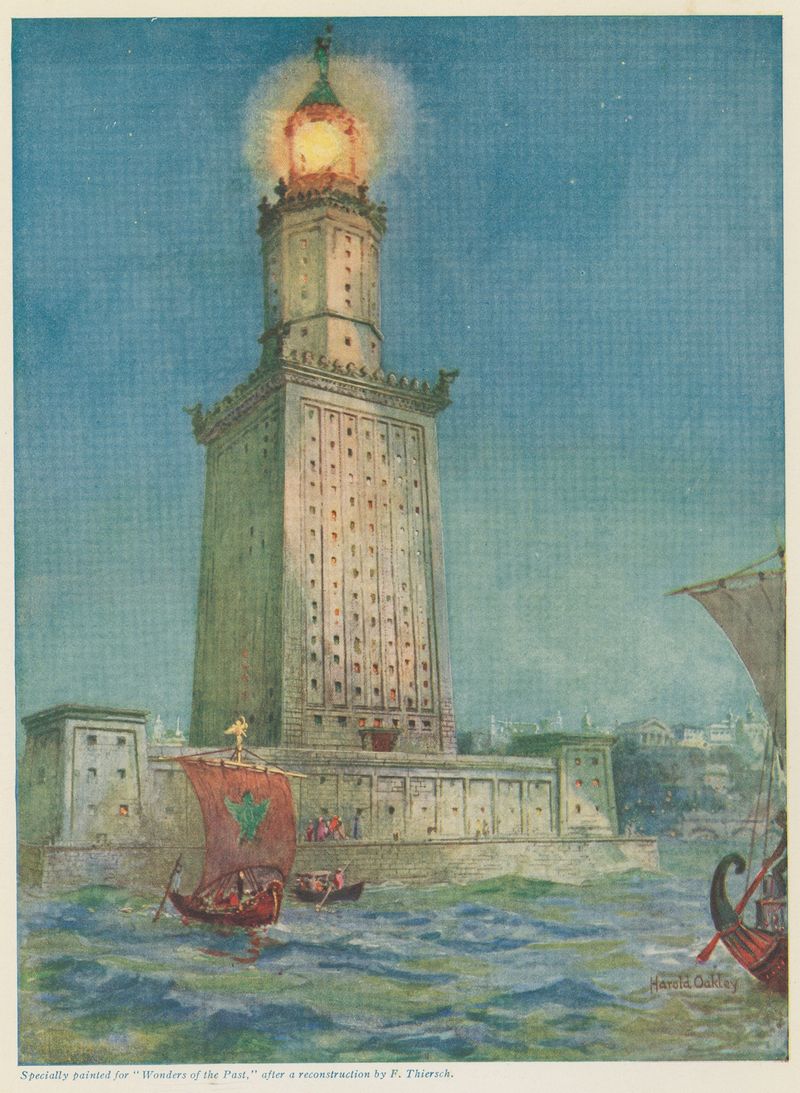
More Architecture Art
Browse all →
The statue of Liberty
Frédéric Auguste Bartholdi

View of Houses in Delft, Known as ‘The Little Street’
Johannes Vermeer

View of Houses in Delft, Known as ‘The Little Street’
Johannes Vermeer

The Cathedral in Rouen. The portal, Grey Weather
Claude Monet

The yellow house
Vincent van Gogh

The Church in Auvers-sur-Oise, View from the Chevet
Vincent van Gogh