Aniene river — History & Facts
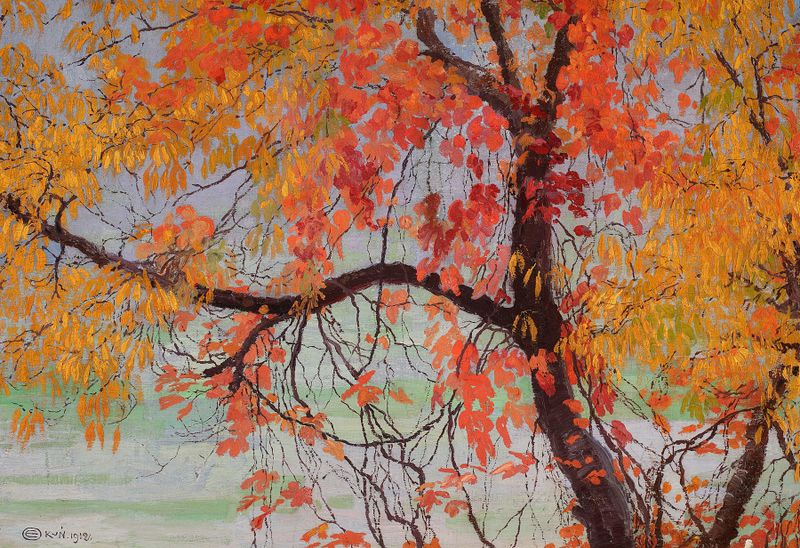
In the delicate interplay of nature and memory, how does one capture the pulse of a moment long past? Look to the center of the canvas, where the serene waters of the Aniene river writhe like a living entity, reflecting the soft hues of twilight. The artist employs a rich palette of blues, greens, and earth tones, inviting the viewer to immerse themselves in the tranquil embrace of the scene. Notice how the gentle ripples seem to dance under the caress of a fading sun, while clusters of trees border the riverbank, their leaves rendered with a meticulous attention to detail that draws you closer, encouraging contemplation. Beneath the surface, hidden meanings emerge, revealing the convergence of nature and emotion.
The flowing water signifies the passage of time, a river of memories that connects the past with the present. Each brushstroke captures not just the scenery but also a sense of longing and introspection, as if the artist is urging us to reflect on our own moments of revelation. The delicate balance of light and shadow evokes a quiet tension, suggesting that beauty can coexist with the transient nature of life. In 1917, Edward Okuń painted this piece during a turbulent time in Europe, marked by the aftermath of World War I.
Living in Poland, he sought solace in the landscapes around him, exploring a personal narrative amidst the chaos. This period was pivotal for the artist, as he drew inspiration from nature’s resilience, ultimately transforming his emotional landscape into an evocative depiction of the Aniene river—a testament to both the beauty and fragility of existence.