Ansicht der Stadt Bern und der Alpen — History & Facts
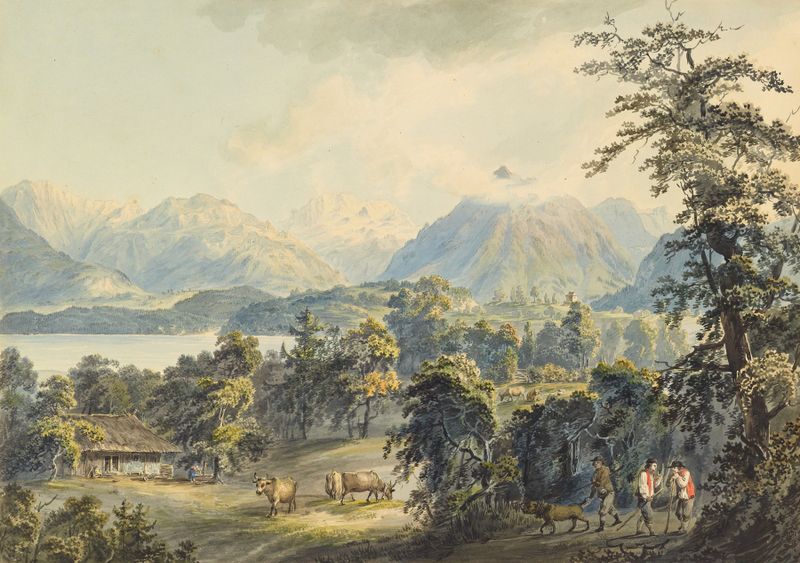
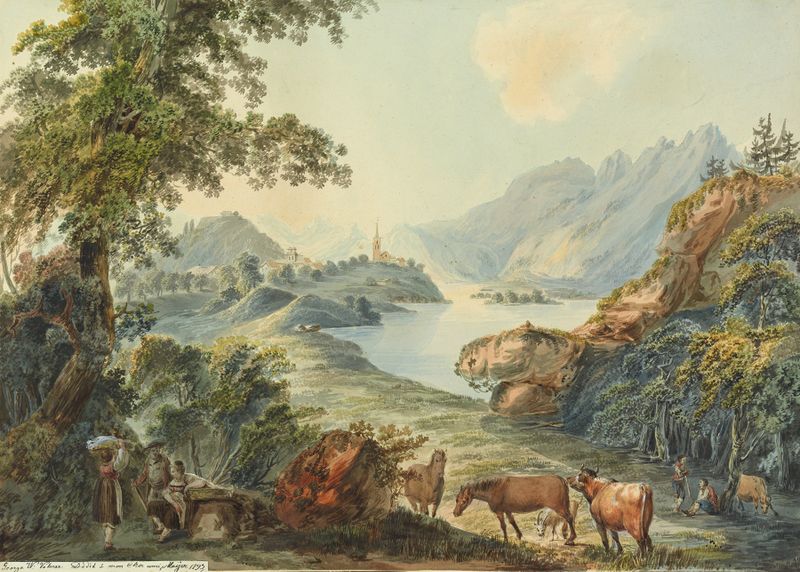
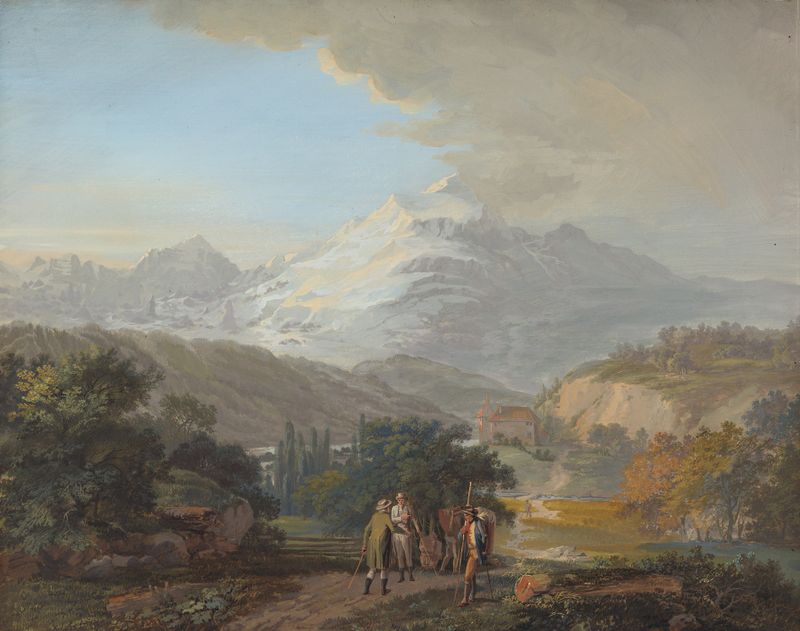
Who listens when art speaks of silence? In the intricate landscape of Johann Georg Volmar’s work, the stillness resonates, invoking a yearning for a deeper connection to place and time. Look to the left at the undulating hills that cradle the city, their muted greens contrasted against the crisp whites of the distant Alps. The composition cleverly draws the eye towards the serene architecture nestled within the valley, where soft pastel hues evoke a dreamlike quality. Notice how the sky, painted with gentle strokes of blue, seems to wrap around the landscape, casting a harmonious light that envelops the scene in a tranquil embrace. This work captures a poignant tension between the bustling life of the city and the serene isolation of the mountains.
The detailed silhouettes of buildings suggest a rich history, while the expansive backdrop of the Alps symbolizes an eternal, untouched realm. The interplay of light and shadow further emphasizes this dichotomy, inviting contemplation on human existence within the greater natural world. Each brushstroke whispers of longing, as if the viewer is drawn to both the familiarity of urban life and the distant allure of nature’s majesty. Volmar created this piece during a time of transition in the art world, likely in the late 18th or early 19th century while residing in Germany and reflecting on the Romantic ideals of nature and emotion.
The artist’s focus on landscapes mirrors the rising interest in capturing the sublime, as the world around him began to shift towards modernity, emphasizing a deep appreciation for the beauty and serenity of the natural environment amidst societal changes.